

Flat or matte latex paint is the standard recommendation for most ceilings because it hides surface imperfections and minimizes light reflection. Choosing what paint to use for ceilings requires considering your room type, moisture levels, and the condition of the surface you’re working with. This guide walks you through the key decisions that separate a professional-looking result from a frustrating DIY experience.
Table of Contents
- Why Ceiling Paint Is Different From Wall Paint
- What Paint Sheen Works Best for Ceiling Surfaces
- Room-by-Room Recommendations for Ceiling Paint
- Top Brands Worth Considering
- Things to Know
Key Takeaways
- Flat or matte latex is the go-to finish for most standard ceiling surfaces.
- High-moisture rooms like bathrooms and kitchens benefit from an eggshell or satin sheen.
- Low-VOC and low-spatter formulas reduce mess and improve air quality during application.
- Brand quality matters: the J.D. Power 2025 U.S. Paint Satisfaction Study ranked Sherwin-Williams, BEHR, and Benjamin Moore as the top three interior paint brands.
- Ceiling condition affects product choice: textured, popcorn, or damaged ceilings each call for a different approach.
- Professional application consistently delivers better coverage and longer-lasting results than DIY, especially on high or damaged ceilings.
Why Ceiling Paint Is Different From Wall Paint
Most homeowners grab whatever wall paint is left over and roll it on the ceiling. However, this shortcut often leads to lap marks, uneven sheen, and multiple coats of frustration. Ceiling paint is formulated specifically for overhead application: it’s thicker to reduce drips, it levels well to hide roller marks, and it typically has a flat finish that diffuses light evenly across a horizontal plane.
Ceiling surfaces also face different stresses than walls. They collect heat, absorb moisture rising from the room below, and show any imperfection under raking light. Therefore, a paint that works beautifully on a vertical wall can look blotchy or reflective when applied overhead.
According to a Painting Industry Statistics report, proper coverage techniques prevent up to 30% of repaint projects. This statistic comes from studies by the Painting and Decorating Contractors of America. Choosing the right product from the start is a significant part of that prevention strategy.
What Paint Sheen Works Best for Ceiling Surfaces
Sheen is the single most important variable when choosing what paint to use for ceilings. Here’s how the most common options perform overhead:
| Sheen Level | Light Reflectivity | Best For | Trade-Offs |
|---|---|---|---|
| Flat/Matte | Very low | Living rooms, bedrooms, hallways | Not washable; shows water stains |
| Eggshell | Low-moderate | Dining rooms, home offices | Slightly more visible imperfections |
| Satin | Moderate | Bathrooms, kitchens | Can highlight surface flaws |
| Semi-Gloss | High | Trim, beadboard ceilings | Very reflective; rarely used on flat ceilings |
If you’re unsure whether an eggshell finish is appropriate for a given ceiling, reviewing the differences between an eggshell vs satin paint finish will help you make a confident call before buying.
The EPA reports that low-spatter paints reduce volatile organic compound emissions by 70% compared to conventional formulas (EPA, 2022). For ceiling work, where paint is applied directly overhead in an enclosed space, choosing a low-VOC product is a practical health consideration. It’s not just a marketing checkbox.
Room-by-Room Recommendations for Ceiling Paint
Not every room calls for the same ceiling paint. Furthermore, understanding your room’s specific environment guides your product choice. Here’s a practical breakdown:
Living rooms and bedrooms: Flat or matte latex is ideal. These rooms have stable humidity. Additionally, a flat finish makes the ceiling recede visually, making the room feel larger and more cohesive.
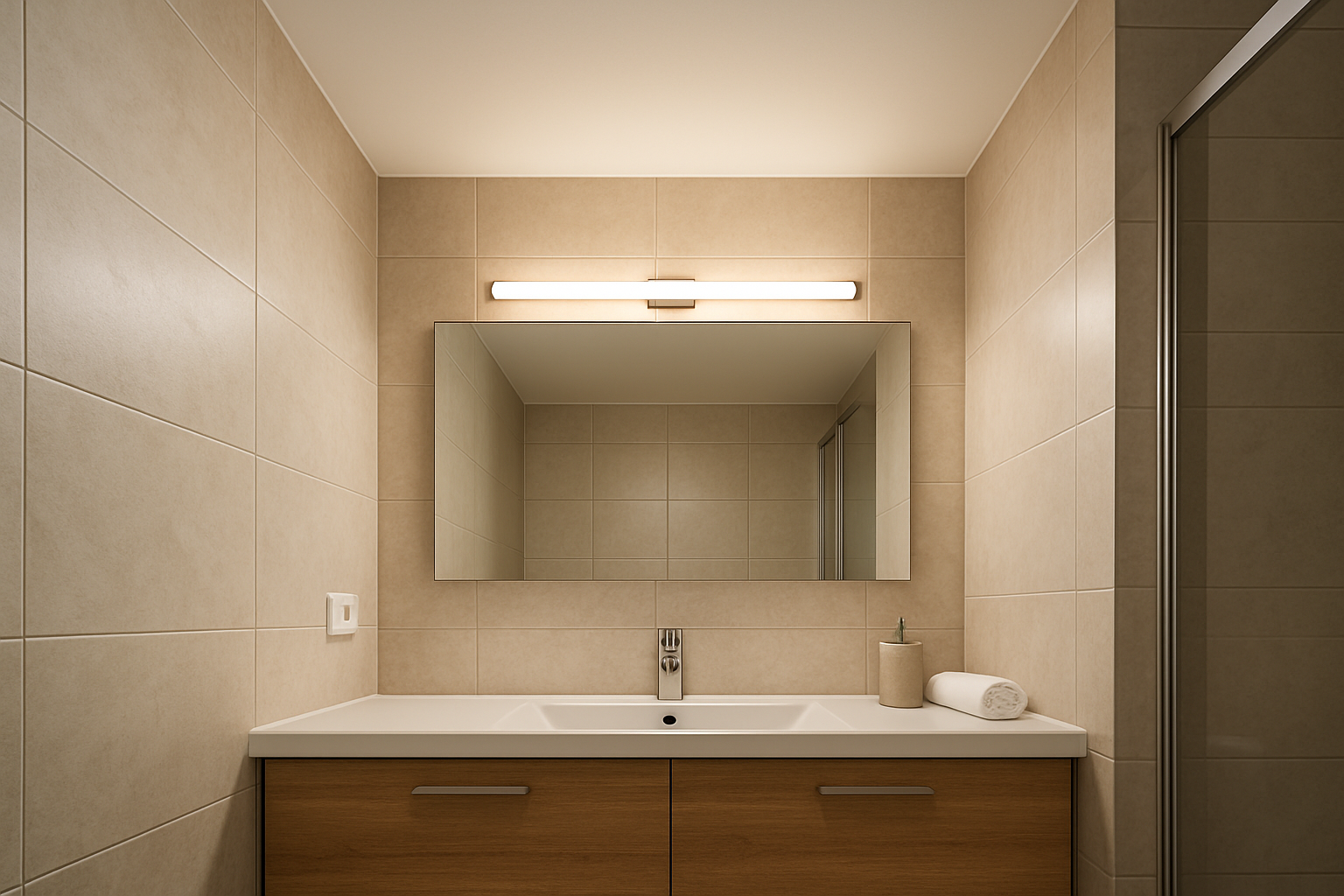
Bathrooms and laundry rooms: Moisture is the enemy here. A satin or eggshell finish resists humidity better than flat paint and can be wiped down if mildew begins to form. Look for a paint labeled “kitchen and bath” or one with mildewcide built in.
Kitchens: Grease and steam both rise, which means kitchen ceilings take a beating. An eggshell or satin finish allows for light cleaning. Moreover, if you’re already working on your kitchen and considering a refresh of the entire space, understanding how to paint kitchen cabinets can help you coordinate the whole project efficiently.
Older homes with popcorn or textured ceilings: These require a thicker, high-build ceiling paint or primer-paint combo to bond properly to the texture without pulling it away. In contrast, if the texture is damaged or outdated, removal may be a better route before repainting.

Top Brands Worth Considering
The 2025 U.S. Paint Satisfaction Study by J.D. Power surveyed 7,119 customers and ranked interior paint brands on overall satisfaction. Sherwin-Williams ranked highest for a third consecutive year with a score of 728. BEHR followed at 727, and Benjamin Moore achieved 725.
For ceiling-specific products, consider these options:
- Sherwin-Williams Ceiling Bright White is a flat-finish, low-spatter formula designed specifically for overhead application.
- Benjamin Moore Waterborne Ceiling Paint offers excellent hide and minimal roller splatter with a true flat finish.
- BEHR Premium Plus Ceiling Paint is a widely available option with solid coverage and low odor.
Each of these brands offers dedicated ceiling paint lines rather than repurposed wall paint. The formulation difference is real: ceiling-specific products are engineered for the viscosity and open time needed to avoid lap marks when rolling overhead.
According to ceiling paint trend analysis from Accio (2025), white ceiling paint consistently holds peak search interest. It scores 98 out of 100 in October 2025 on Google Trends, which confirms it remains the dominant choice for American homeowners by a significant margin.
Things to Know
- Ceiling paint is not interchangeable with wall paint. The higher viscosity of ceiling-specific products reduces dripping and allows for thicker, more even coverage in a single coat.
- Priming matters on new drywall or after repairs. Skipping primer on fresh drywall causes flashing, where the sheen looks uneven because the drywall absorbs paint at different rates.
- Surface prep is often the limiting factor. If you’ve recently removed wallpaper, make sure the surface is fully clean and sealed before painting. Residual adhesive will bleed through otherwise. Understanding how to remove wallpaper properly before priming is essential for a smooth finish.
- Tinted ceilings are gaining traction. According to Accio’s 2025 analysis, searches for tongue-and-groove ceilings increased by 73% over the past year. This reflects broader interest in ceiling as a design feature rather than an afterthought.
- One coat is rarely enough. Even high-hide ceiling paints typically need two coats when covering a color change or a stain.
Take Your Ceiling Project Off Your Plate With Custom Colonial Painting
Selecting the right paint is only part of the equation. Proper application technique, surface prep, and the right tools determine whether a ceiling looks professionally finished or just painted. Custom Colonial Painting serves homeowners across Connecticut, including Greenwich, New Canaan, Fairfield, Darien, and Trumbull, with interior painting services backed by 15+ years of average painter experience, EPA Lead-Safe certification, and $2M in general liability coverage.
Contact Custom Colonial Painting today for a free, personalized estimate and find out exactly what paint, prep, and approach your ceiling needs.
Frequently Asked Questions
Q: Can I use regular wall paint on a ceiling?
Technically yes, but it’s not recommended. Wall paint lacks the thickness and anti-drip properties of ceiling-specific formulas. This means more mess, more coats, and a higher chance of lap marks. Ceiling paint is engineered for overhead application in ways that wall paint simply isn’t.
Q: How much does ceiling painting typically cost?
Costs vary based on room size, ceiling height, and surface condition. For a detailed breakdown of what to budget across different project types, reviewing how much does house painting cost will give you a realistic baseline before you start getting quotes.
Q: Do I need to prime my ceiling before painting?
Yes, in most cases involving new drywall, stains, or post-repair surfaces. A PVA primer on new drywall prevents uneven sheen. A stain-blocking primer (shellac or oil-based) is necessary over water stains or smoke damage before applying any topcoat.
Q: How many coats of ceiling paint are typically needed?
Two coats are standard for most ceiling projects. One coat may suffice if you’re painting a similar color over a clean, primed surface. Any color change, stain coverage, or transition from a previous flat paint that has yellowed will require two full coats.
Q: Is flat ceiling paint always white?
No, flat ceiling paint can be tinted to any color. While white remains dominant, tinted ceilings in soft grays, warm greiges, and even bold colors are increasingly popular. Most ceiling paint bases accept custom tints at the point of purchase.
The Bottom Line on What Paint to Use for Ceilings
Choosing the right ceiling paint comes down to four variables: sheen level, room conditions, surface preparation, and brand quality. Flat latex handles most rooms reliably, while bathrooms and kitchens call for a more moisture-resistant finish. Starting with a quality product from a proven brand, properly primed and applied in two coats, is the most reliable path to a ceiling that looks clean and holds up for years.
If you’d rather skip the guesswork and get it done right the first time, reach out to a qualified local contractor who can assess your ceiling’s specific needs and deliver a professional result.