
What’s In This Guide
- Which Wall Should Be Your Accent Wall?
- What Accent Wall Paint Ideas Work Best in Real Rooms?
- Painted Accent Wall or Wainscot and Board-and-Batten?
- What Accent Wall Mistakes Should You Avoid?
- How Does a Professional Painter Get a Clean Accent Wall Finish?
- Frequently Asked Questions
- Ready to Try an Accent Wall in Your Home?
Most accent wall ideas online look great in a staged photo. Then you try one at home and realize your room has a TV, a vent, two windows, and a hallway doorway right where the feature wall was supposed to go.
Quick Facts
- Pick the wall your eye lands on first, not the one that is easiest to paint.
- Choose a color that connects to your trim, flooring, and furniture.
- A dark accent wall can work in many rooms when the lighting is planned.
- Painted walls suit smooth surfaces, while board-and-batten and wainscot add texture and depth.
- Sample the color on the actual wall and check it at different times of day.
Which Wall Should Be Your Accent Wall?

The best accent wall is the one people see first when they walk into the room, and it should have few interruptions like windows, doors, or vents. A clear, uninterrupted surface gives the color room to do its job.
Start With the Natural Focal Point
Stand in the doorway and notice where your eyes go. That wall is usually your best candidate. In a bedroom, it is often the wall behind the bed. In a living room, it may be the fireplace wall or the wall behind the sofa.
Follow the Room’s Architecture
Walls with built-in features already signal importance. A fireplace, a bump-out, or a long uninterrupted stretch above a sofa all say “look here.” Colonials and older Connecticut homes often have these natural anchors, so you rarely need to create one. That is true for homeowners exploring the best house painting options in Stamford, CT, too.
Avoid Walls With Too Many Breaks
A wall with a door, two windows, and a thermostat has too many interruptions. The color gets chopped up, and the effect looks accidental instead of intentional.
|
Room |
Strong Accent Wall Choice |
Wall to Skip |
|
Bedroom |
Wall behind the headboard |
Wall with the closet doors |
|
Living room |
Fireplace or sofa wall |
Wall split by a large window and a doorway |
|
Dining room |
Wall behind the main table or buffet |
Wall shared with a kitchen pass-through |
|
Home office |
Wall behind your desk or shelving |
Wall facing your screen, if glare is a concern |
|
Entryway |
Wall opposite the front door |
Wall with stair rail and multiple trim returns |
What Accent Wall Paint Ideas Work Best in Real Rooms?

The most reliable accent wall paint ideas pick one clear strategy: go deeper, go contrasting, or go tonal. Each approach works, but each one suits a different type of room and a different level of commitment.
Go Deeper: A Richer Shade of Your Main Color
This is the safest route. If your walls are a soft greige, choose a deeper greige or a warm taupe for the accent wall. The color relationship stays calm, and the room feels layered instead of divided.
Go Contrasting: Use a Color From Your Existing Palette
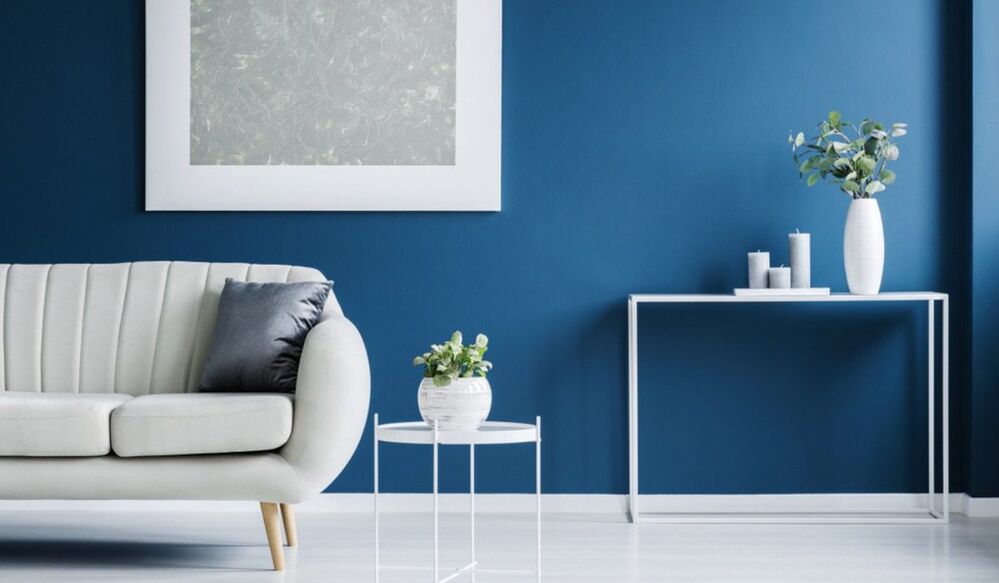
Pull a color from a rug, artwork, or upholstery and use a deeper version on the accent wall. Navy behind a cream sofa or sage green near warm wood furniture are good examples. The room looks planned because the color already exists in the space.
Go Tonal: Stay in the Same Family
Tonal accents are ideal if you like a quieter look. Pair a pale warm white with a slightly deeper warm neutral. It adds depth without a dramatic change. In bedrooms and other living spaces, low-VOC paint options can also help reduce paint odor.
Match Color to the Room’s Light
Light changes color more than most homeowners expect. North-facing rooms tend to look cooler, while south-facing rooms tend to bring out warmth. Test your sample on the real wall and look at it in the morning, afternoon, and evening before you commit.
Quick color strategy guide:
|
Strategy |
Best For |
Works Well With |
|
Deeper shade of main color |
Rooms where you want subtle depth |
Neutral walls, wood trim |
|
Contrasting palette color |
Living rooms, bedrooms with defined decor |
Patterned rugs, colorful art |
|
Tonal neutral |
Small rooms, first-time repaints |
Light flooring, white trim |
|
Bold dark tone |
Dining rooms, dens, bedrooms |
Warm lighting, brass or black fixtures |
Painted Accent Wall or Wainscot and Board-and-Batten?
Paint alone is the simplest option and works on smooth, flat walls. Wainscot and board-and-batten add texture and architectural character, and they typically cost more because they involve carpentry before painting. The right choice depends on the room and how much dimension you want.
When Paint Alone Is Enough
A painted accent wall is the right call when the wall is clean, flat, and you want a fast refresh. It is also the easiest to change later if your tastes shift. It can be a good winter project, too, as long as you follow tips for interior painting in cold Connecticut weather.
When Board-and-Batten Makes Sense
Board-and-batten adds vertical lines that draw the eye up and give a wall a custom look. It works well in entryways, bedrooms, dining rooms, and mudrooms. Painted in a deeper tone, it creates strong visual interest, even in a simple room.
When Wainscot Is the Better Fit
Wainscot covers the lower portion of the wall and is a classic fit for Colonial-style homes, dining rooms, hallways, and stairways. It also protects the wall where scuffs happen most. Paint the wainscot one shade and the wall above another for a polished two-tone look.
|
Feature |
Paint Only |
Board-and-Batten |
Wainscot |
|
Visual effect |
Clean, color-driven |
Modern, vertical texture |
Traditional, layered |
|
Work involved |
Prep and painting |
Carpentry plus painting |
Carpentry plus painting |
|
Best rooms |
Bedrooms, living rooms |
Entryways, bedrooms, dining rooms |
Dining rooms, hallways, stairways |
|
Flexibility later |
Easy to repaint |
Moderate, trim stays in place |
Moderate, trim stays in place |
A Note for Older Connecticut Homes
Many Connecticut homes were built before 1978, and older paint layers may contain lead. Installing trim often means sanding, scraping, or cutting into painted surfaces. Under EPA’s Renovation, Repair, and Painting Rule for pre-1978 homes, certified firms must follow lead-safe work practices when disturbing paint in most of these homes. Before any trim work or heavy prep begins, confirm that your contractor is EPA Lead-Safe certified.
What Accent Wall Mistakes Should You Avoid?
Most accent wall problems come from choosing the wrong wall, skipping samples, or rushing the prep. These are all avoidable with a little planning.
Choosing the Wall Because It Is Easy
The wall with the least furniture is not always the best wall. If it is not the focal point, the color feels random.
Picking Color From a Tiny Chip
A small paper chip cannot show how a color behaves across a full wall. Use a larger painted sample on the actual wall and live with it for a few days. Let it dry fully before judging the color, since how long paint takes to dry on walls varies with the product and humidity.
Ignoring the Ceiling and Trim
Bright white trim against a muted accent color can look stark, while warmer whites often blend more comfortably. Ask for a trim recommendation at the same time you pick the accent color.
Using Too Many Accent Walls
One accent wall creates emphasis. Three accent walls create confusion. In most rooms, one is enough, and a second can work only in a larger space with a clear reason.
Skipping Prep Work
Cracks, nail holes, and rough patches show up under accent colors, especially darker ones. Good prep includes patching, sanding, and priming where needed. Skipping those steps leads to visible flaws and shorter paint life.
Forgetting About Edges and Corners
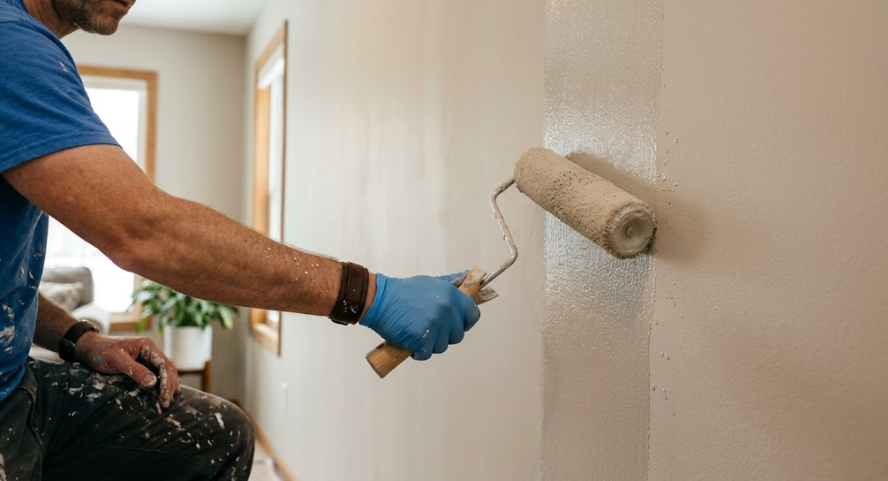
A sharp, clean line where the accent wall meets a neighboring wall is what separates a professional look from a rushed one. Textured walls and uneven corners make this harder, so careful cutting-in matters.
How Does a Professional Painter Get a Clean Accent Wall Finish?
A clean accent wall comes from three things: thorough prep, a quality paint system, and careful edge work. Our painters have an average of more than 15 years of hands-on experience, and we use only Sherwin-Williams and Benjamin Moore paints.
Here is what that looks like on a typical accent wall project:
- Surface check: Look for cracks, dents, and old repairs that will show through.
- Prep and priming: Patch, sand, and prime so the color goes on evenly.
- Edge protection: Mask trim, ceilings, and neighboring walls for sharp lines.
- Full coverage: Apply the right number of coats for the color and finish.
- Cleanup: Remove tape, wipe the area, and leave the room ready to use.
If you want expert help with color selection, prep, and application, learn more about professional interior painting services for Connecticut homeowners.
Frequently Asked Questions
What are the best accent wall ideas for a small room?
Stay with one wall and a tonal or slightly deeper shade of your main color. This adds depth without shrinking the space. Board-and-batten painted in a soft tone can also add interest without bulk.
Are accent walls still in style?
Yes, when they are chosen with purpose. An accent wall works best when it highlights a focal point and connects to the rest of your palette, instead of being added only for color.
Are dark accent walls still a good idea?
Yes, as long as the room has enough light and you pair the wall with warm lighting. A dark accent wall adds depth and can make furniture and artwork stand out. Good prep and the right sheen matter a lot.
What paint sheen is best for an accent wall?
Eggshell and matte finishes soften glare and help hide small wall imperfections, which makes them popular for darker colors. Satin holds up better to cleaning in busy rooms like kitchens and hallways, and the difference between satin and semi-gloss finishes is worth knowing if you are painting trim too. Your painter can recommend the right sheen based on the room’s lighting and use.
How do you choose an accent wall in an open floor plan?
Stop the accent color at an inside corner so the line looks intentional. Look for a wall that already feels defined, such as one with a fireplace or a bump-out, or one that marks a change in room function. Avoid ending the color partway along a flat, continuous wall.
Ready to Try an Accent Wall in Your Home?
The best accent walls come from a few smart decisions: the right wall, a color that fits your light, and careful prep. Whether you want a rich dark tone, a layered wainscot look, or a simple refresh, a professional finish makes the difference between a wall that looks planned and one that looks rushed.
Custom Colonial Painting has helped homeowners across Connecticut for more than 20 years, from single feature walls to full interior repaints. Share your room, your color ideas, and your timeline, and we will help you plan the right approach.
Related Posts