
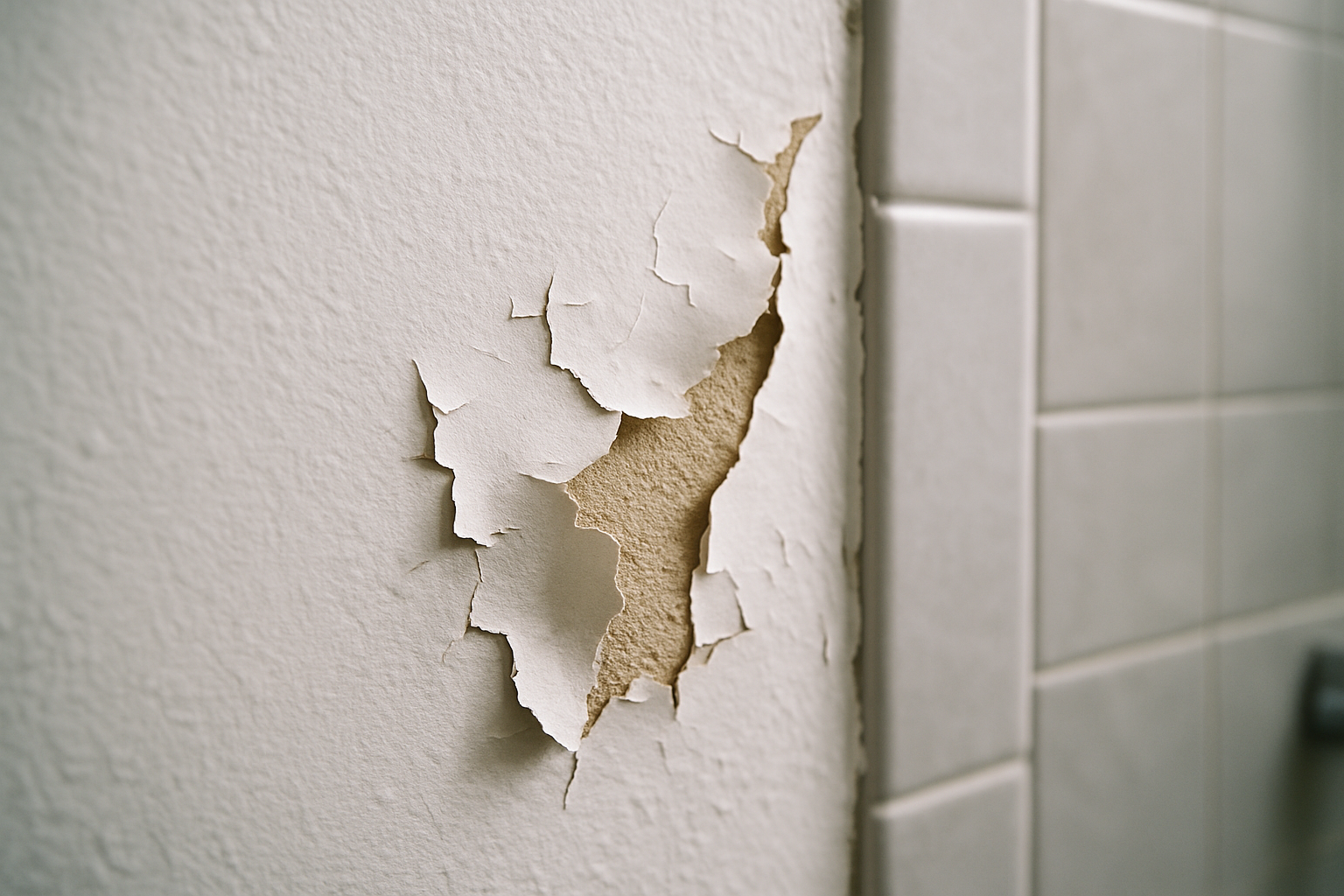
Choosing the best paint for bathroom walls comes down to two non-negotiables: moisture resistance and durability. Bathrooms are the most humidity-prone rooms in any home. Therefore, the wrong paint will peel, blister, and grow mildew long before you’re ready to redecorate.
Table of Contents
- Why the Best Paint for Bathroom Walls Is Different From Regular Interior Paint
- The Right Paint Finish for Bathroom Walls
- Top Paint Brands Worth Using in a Bathroom
- Bathroom Paint Colors That Are Trending Right Now
- Surface Prep and Application Tips
- Common Mistakes That Shorten Paint Life in Bathrooms
Why the Best Paint for Bathroom Walls Is Different From Regular Interior Paint
Most people don’t think twice about paint selection until they’ve repainted a bathroom with standard flat wall paint. Then they watch it blister within a year. Bathrooms cycle through extreme humidity swings every single day. Steam from showers, splashing near the sink, and poor ventilation create an environment where standard interior paint simply cannot hold up.
Two primary failure modes occur with inadequate paint. The first is peeling. This happens when moisture gets behind the paint film and breaks the bond with the substrate. The second is mildew growth. This occurs when moisture sits on the surface long enough for spores to colonize. Both problems are preventable if you select paint specifically formulated to resist them.
Anti-mould and moisture-resistant bathroom paints are a growing product category for good reason. Additionally, according to DataInsights Market (2026), the global anti-mould bathroom paint market is expected to reach $638 million by 2033. The market will grow at a CAGR of 3.8% from 2023 to 2033. This growth reflects real consumer demand driven by genuine frustrations with paint that fails too quickly.
The core ingredient difference lies in the binder. Bathroom-grade paints use denser, harder-curing acrylic or vinyl-acrylic binders. These form a tighter film than standard formulas. Moreover, many include mildewcide additives. These additives don’t make the paint completely mildew-proof. However, they meaningfully slow spore growth on the surface. This gives you a much longer service life.
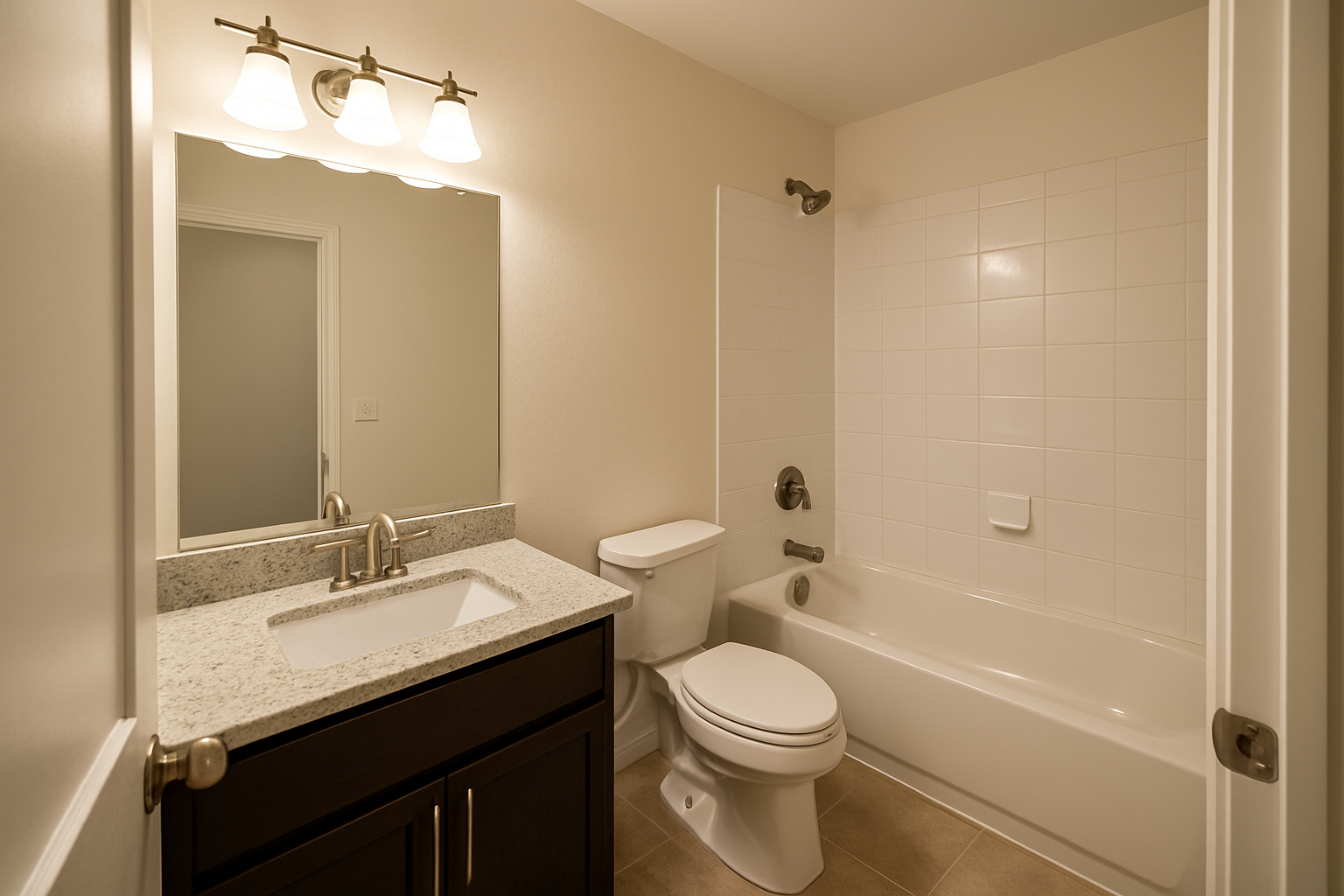
The Right Paint Finish for Bathroom Walls
Finish selection is where most homeowners make their first mistake. Here’s a quick breakdown of how the main finish types perform in a bathroom environment:
| Finish Type | Sheen Level | Moisture Resistance | Ease of Cleaning | Recommended for Bathrooms? |
|---|---|---|---|---|
| Flat/Matte | None | Poor | Difficult | No |
| Eggshell | Very Low | Moderate | Moderate | Sometimes (low-moisture baths) |
| Satin | Low-Medium | Good | Easy | Yes (main walls) |
| Semi-Gloss | Medium-High | Very Good | Very Easy | Yes (trim, ceilings) |
| Gloss | High | Excellent | Excellent | Trim/accents only |
For most bathroom walls, satin is the best paint finish choice. It reflects enough light to make the space feel bright. Additionally, it wipes down easily after splashing. Furthermore, it forms a durable enough film to resist humidity without looking overly shiny. Semi-gloss is a better choice for trim work, window casings, and the ceiling directly above the shower. Those areas take the most direct moisture exposure. If you’re wondering how to paint a ceiling without streaks, the finish you choose matters as much as the technique. This is especially true in a wet environment where lap marks become more visible.
Flat paint on bathroom walls is a mistake regardless of how beautiful the color looks in the can. It absorbs moisture and traps bacteria. You cannot clean it without leaving marks. Reserve flat finishes for bedrooms and living areas.
Top Paint Brands Worth Using in a Bathroom
Not all paint labeled “bathroom paint” delivers the same results. Two brands consistently outperform the field in moisture-prone residential applications. These are the best paint for bathroom walls that professionals recommend.
Sherwin-Williams offers several products suited to bathrooms. Their Emerald Interior line uses a water-based acrylic formula with built-in stain-blocking and mold/mildew-resistant properties. It’s self-priming on previously painted surfaces in good condition. This saves a step in your project timeline. The Duration Home line is another strong option for the best paint for bathroom walls. It offers excellent scrub resistance for high-traffic bathrooms.
Benjamin Moore produces Aura Bath and Spa. This is arguably the most purpose-built bathroom paint on the consumer market. It’s formulated specifically for high-humidity environments. Furthermore, it uses a matte finish that still resists moisture. Unlike standard matte, this formula applies beautifully without roller stippling. The color depth from Benjamin Moore’s Color Lock technology makes it a favorite among professional painters who work in bathrooms regularly.
Both brands represent what Custom Colonial Painting uses exclusively on residential projects throughout Connecticut. Their painters average 15+ years of experience each. They choose these brands because they consistently perform in the field rather than just on a spec sheet.
At the broader market level, the global interior paints market was valued at approximately $20 billion in 2023. It is projected to reach $30 billion by 2032. The growth rate is a CAGR of 4.5% (DataIntelo, 2025). Within that market, premium bathroom-specific formulations represent one of the fastest-growing subcategories. As a result, both Sherwin-Williams and Benjamin Moore continue to expand their moisture-resistant product lines.
Bathroom Paint Colors That Are Trending Right Now
Color selection in a bathroom is more nuanced than in other rooms. You’re working with a small, often windowless space that needs to feel clean, calm, and larger than it is. Additionally, the color you choose will look different under artificial light than it does in a showroom. Therefore, always test samples on the actual wall before committing.
According to Improovy (2024), modern blue, light green, and warmer neutral bathroom color schemes are among the most popular choices for 2024. These colors work because they evoke cleanliness and calm without making a small bathroom feel cave-like.
Looking ahead, interior designers cited by AOL (2026) suggest that warm whites will dominate bathroom palettes in 2026. The trend moves away from stark cool whites toward softer, more restorative shades. Think creamy off-whites with subtle yellow or pink undertones rather than the cold, clinical whites that defined bathroom design for the past two decades.
A few color principles worth keeping in mind:
- Light colors (soft blues, warm whites, pale sage) make small bathrooms feel more open. They are also the most forgiving under varied lighting.
- Medium tones (dusty greens, muted terracotta, warm taupe) work well in larger bathrooms with decent natural light.
- Deep, saturated colors (navy, forest green, charcoal) can work beautifully in bathrooms with good lighting. However, they require two to three coats of high-quality paint. They are unforgiving of surface imperfections.
If you’re unsure where to start with color, reviewing best paint colors for living room selections can help. This gives you a sense of how color palettes translate across rooms in the same home. As a result, you’ll maintain a cohesive flow from shared spaces into the bathroom.
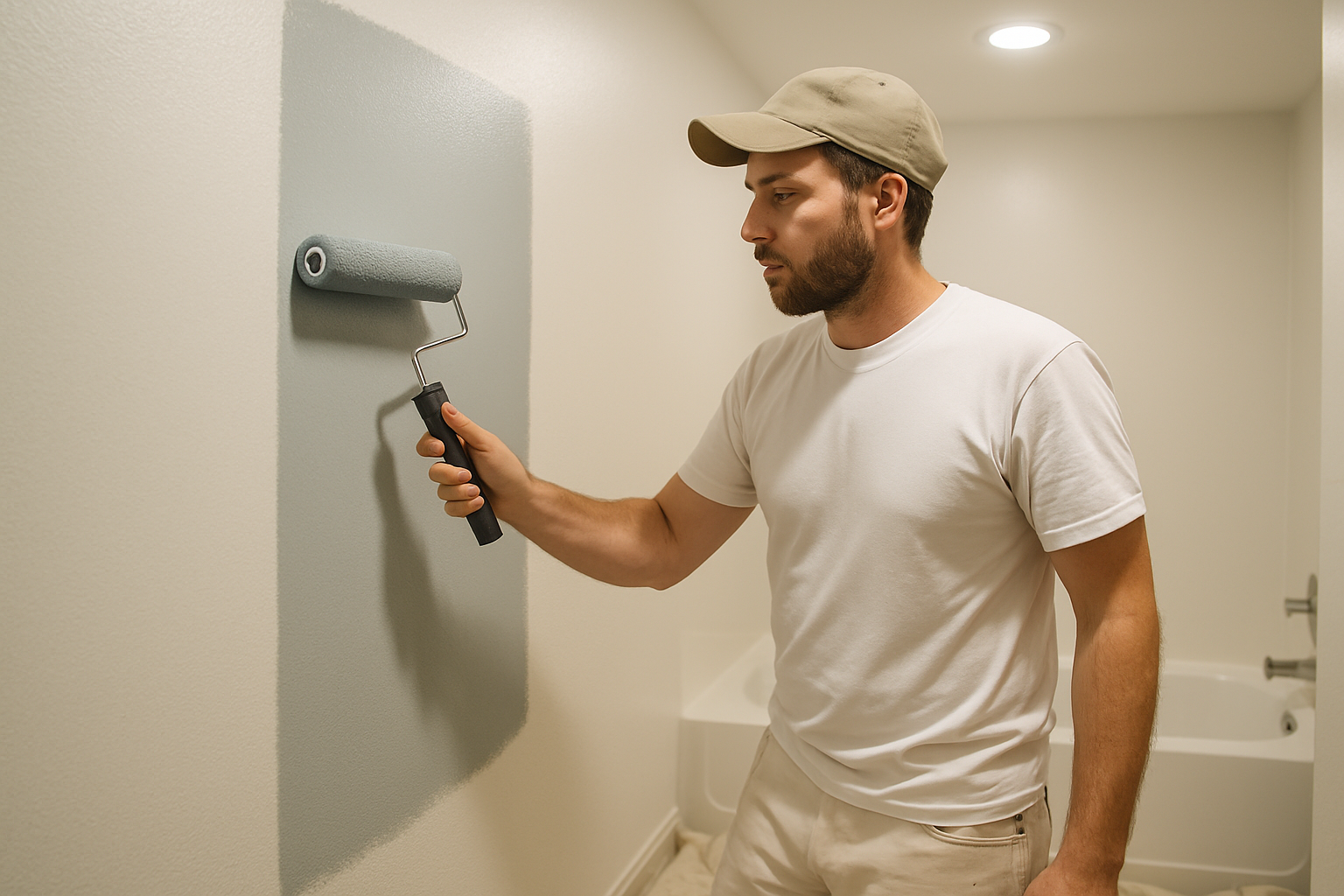
Surface Prep and Application Tips
Even the best bathroom paint underperforms on a poorly prepared surface. Prep work accounts for the majority of how long any paint job lasts in a high-humidity environment.
Cleaning the surface is the first step. Bathroom walls accumulate soap scum, body oils, and existing mildew. Use a TSP (trisodium phosphate) substitute solution or a diluted bleach wash to kill any surface mildew before sanding or priming. Moreover, applying paint over active mildew is one of the most common reasons bathroom paint jobs fail within months.
Repairing damage comes next. Fill any cracks, holes, or areas where old paint has lifted. Use a moisture-resistant spackle compound, not standard drywall compound. Standard compound will absorb humidity and break down over time.
Priming is essential if you’re painting over bare drywall. Similarly, it’s necessary for a dramatically different color or surfaces that have shown previous moisture damage. Use a shellac-based or high-solids acrylic primer for maximum adhesion in humid conditions. If the surface is in good shape and you’re using a self-priming formula like Sherwin-Williams Emerald, you can often skip a separate prime coat.
Application order should run from ceiling to walls to trim. Apply two coats minimum. Allow full drying time between coats as specified on the product data sheet. Don’t rely on just the touch-dry time. Bathrooms trap solvents. Therefore, ventilate during and after application by opening windows or running an exhaust fan.
The same attention to prep applies to exterior projects. If you’ve ever wondered how long does exterior paint last, the answer is almost always tied directly to surface preparation. The principle holds indoors with equal importance.
Common Mistakes That Shorten Paint Life in Bathrooms
Understanding what causes bathroom paint to fail early helps you avoid repeating those mistakes. This applies whether you’re DIYing or evaluating a contractor’s work.
Using the wrong sheen. As discussed above, flat paint in a bathroom is a short-term decision you’ll regret. Even if you love a matte look, opt for a product like Benjamin Moore Aura Bath and Spa. It’s engineered for humidity rather than a standard flat formula.
Skipping primer on new drywall. Bare drywall is extremely porous and will absorb your first coat unevenly. This leads to an uneven finish. Additionally, it weakens adhesion. Both factors accelerate peeling in humid conditions.
Not addressing ventilation. Paint is not a substitute for an exhaust fan. If your bathroom has inadequate ventilation, even the best product will struggle over time. Proper ventilation removes humidity at the source. This reduces the load on your paint’s moisture resistance.
Painting over damp walls. This seems obvious, but bathrooms that have been in use are rarely fully dry. If you’re repainting an active bathroom, give walls at least 24 to 48 hours of dry time after cleaning. Wait before applying paint.
Rushing between coats. Applying a second coat before the first has fully cured traps solvents. This causes adhesion failures. Follow the manufacturer’s recoat window, not the touch-dry time.
If you’re managing a broader home renovation alongside a bathroom repaint, projects like how to stain a deck follow similar prep logic. Clean, repair, prime, and apply in proper sequence for results that last.
Things to Know
- Bathroom paint labeled “mold and mildew resistant” contains mildewcide additives that slow spore growth. However, they are not a permanent fix. Poor ventilation will eventually overwhelm any paint’s resistance, regardless of how premium the formula is.
- Satin finish is the most practical choice for the majority of bathroom walls. However, if your bathroom has significant surface imperfections like old texture, minor dings, or uneven patches, eggshell can be more forgiving visually. It still offers adequate moisture resistance in low-steam bathrooms.
- Paint color will shift noticeably under bathroom lighting. Cool-toned LED bulbs make whites look stark and blues look gray. Therefore, test your sample under the actual lighting conditions in your bathroom before purchasing full gallons.
- Two coats of a quality paint will always outperform three coats of a budget formula in a humid environment. Spending more on product and spending less on labor is the smarter long-term calculation.
- If there is any existing mildew on the walls, no paint will cover the problem permanently. You must kill and remove the mildew with an appropriate cleaner before any primer or paint goes on. Otherwise, the mildew will return through the new finish within months.
- Benjamin Moore Aura Bath and Spa uses a matte finish that is engineered to resist moisture. This is an exception to the general rule that matte paint should be avoided in bathrooms. It is one of the few matte products that holds up in high-humidity conditions without peeling or trapping mildew.
Let Custom Colonial Painting Handle Your Bathroom Right the First Time
A bathroom paint job that fails in 18 months costs you twice. You pay once for the original work. Then you pay again to fix it. Custom Colonial Painting’s team carries CT HIC #0630904 and EPA Lead-Safe certification. They use only Sherwin-Williams and Benjamin Moore products. Furthermore, they bring an average of 15+ years of experience to every interior project across Connecticut.
Contact Custom Colonial Painting today for a free, personalized estimate. Find out exactly which products, finishes, and prep steps your bathroom walls need to hold up for years. Reach out now and get a no-obligation quote tailored to your home.
Frequently Asked Questions
Q: What is the difference between regular interior paint and the best paint for bathroom walls?
Regular interior paint is not formulated to withstand the sustained humidity, steam, and temperature swings that bathrooms experience daily.
Bathroom-specific paints use denser acrylic binders that cure into a harder, less porous film. Additionally, most include mildewcide additives that slow surface mold growth. Standard interior paint, particularly flat or eggshell formulas, absorbs moisture more readily. As a result, it leads to blistering, peeling, and mildew buildup far sooner than a purpose-built bathroom product would.
Q: How often should you repaint bathroom walls?
Most bathroom walls painted with a quality satin or semi-gloss paint from a reputable brand should last five to seven years before requiring a full repaint.
The actual lifespan depends heavily on ventilation quality. It also depends on how heavily the bathroom is used. Additionally, it depends on whether the surface was properly prepped before the original application. Bathrooms with inadequate exhaust fans or households with multiple daily showers will see paint degrade faster regardless of product quality. Touch-ups can extend the life of a paint job between full repaint cycles.
Q: Can you use the same paint on bathroom walls and bathroom ceilings?
You can use the same paint formula on both surfaces, but the ceiling above the shower should receive a semi-gloss or at minimum a satin finish rather than a flat ceiling paint.
Flat ceiling paint is widely used in bedrooms and living areas. However, it performs poorly in bathrooms where steam rises and condenses directly on the ceiling surface. Applying the same satin or semi-gloss bathroom wall paint to the ceiling is a practical solution. This simplifies your project and ensures consistent moisture resistance across the entire room.
Q: Do you need to prime bathroom walls before painting?
Priming is required on bare drywall, surfaces with previous moisture damage, or walls where you are making a significant color change.
On surfaces that are already painted and in good condition, a self-priming formula like Sherwin-Williams Emerald can eliminate the separate prime coat. However, if you are painting over any area that has had mildew, water stains, or peeling, a shellac-based primer applied first will seal those problem areas. This prevents them from bleeding through your finish coats.
Q: Is it worth hiring a professional painter for a bathroom, or is it a reasonable DIY project?
A small bathroom is one of the more manageable DIY painting projects, but the prep work, product selection, and ventilation requirements mean that mistakes are more consequential than in a low-humidity room.
If your bathroom has existing mildew damage, lead paint from an older home, or significant surface repairs needed, professional evaluation is the safer path. Licensed contractors with EPA Lead-Safe certification, like Custom Colonial Painting serving homeowners across Connecticut, are equipped to handle those conditions correctly. For a straightforward repaint of a well-maintained bathroom, a careful DIYer who follows proper prep steps and chooses the right product can achieve good results.