

What’s in This Guide
- What Are Two Tone Kitchen Cabinets, and Why Do They Work?
- Which Two Tone Cabinet Ideas Work Best for Uppers and Lowers?
- How Do You Choose Color Combinations That Work Together?
- Should You Use a Different Color on the Kitchen Island?
- Which Hardware Works With Two Tone Cabinets?
- What Paint and Process Hold Up on Kitchen Cabinets?
- When Are Your Cabinets Ready for a Two Tone Update?
- What Affects the Cost of Painting Two-Tone Cabinets?
- How Do You Keep Two Tone Cabinets Looking Good?
- Frequently Asked Questions
- Ready to Update Your Kitchen Cabinets?
Two-tone kitchen cabinets let you bring in color without handing the whole room over to it. A deep navy island, soft white uppers, or sage green lowercases can make a Connecticut kitchen feel designed instead of simply updated. The hard part is choosing a pairing that still looks right in five years, then making sure the paint holds up to daily cooking, cleaning, and humidity.
The right two-tone cabinet ideas come down to a few decisions: which cabinets get which color, how the island fits in, which hardware ties it together, and whether the prep underneath is built to last.
Key Takeaways
- Darker lowers with lighter uppers is the most reliable layout for two tone kitchen cabinets.
- Two colors that share the same undertone will always look more intentional than two colors chosen separately.
- An island in a contrasting color is the lowest-risk way to try a two tone look.
- Hardware finish should connect the two colors, not compete with them.
- Prep, primer, and a cabinet-grade enamel decide how long painted cabinets last, far more than the color does.
What Are Two Tone Kitchen Cabinets, and Why Do They Work?
Two tone kitchen cabinets use two finishes, usually two paint colors or one paint color plus natural wood, to add depth and define zones in the kitchen. They work because contrast gives the eye a focal point and breaks up long, uniform cabinet runs.
Contrast Adds Depth
A single color across every cabinet can read flat, especially in larger kitchens. A second tone separates the perimeter from the island, or the lower cabinets from the uppers, so the room has layers instead of one solid block. This approach also shares some principles with using accent wall colors to create visual interest without overwhelming the room.
They Suit Connecticut Homes
Many Connecticut kitchens sit inside colonials, capes, and older homes with defined rooms and limited wall space. Light uppers keep the walls feeling open, while a deeper lower color adds weight and character that suits a traditional home. In a newer open-plan kitchen, the same approach helps the cooking zone stand apart from the living space.
Which Two Tone Cabinet Ideas Work Best for Uppers and Lowers?

Darker lowers with lighter uppers is the most dependable combination. It grounds the kitchen, hides everyday scuffs near the floor, and keeps the upper half bright.
Dark Lowers, Light Uppers
This layout mimics how a room naturally works: visual weight at the bottom, light at the top. It also suits smaller kitchens, since pale uppers do not close in the space.
Light Lowers, Dark Uppers
This reverses the usual rule, and it can look dramatic in a tall, bright kitchen. In a room with limited natural light or low ceilings, dark uppers can feel heavy, so test it carefully before committing.
Painted Cabinets With Wood Accents
Pairing painted cabinets with a natural wood island or open shelving adds warmth without a second paint color. It is a good fit when you want contrast but prefer a softer look.
|
Uppers |
Lowers or Island |
Hardware |
Works Best For |
|
Benjamin Moore White Dove (OC-17) |
Benjamin Moore Hale Navy (HC-154) |
Brushed brass |
Traditional and colonial kitchens |
|
Sherwin-Williams Alabaster (SW 7008) |
Sherwin-Williams Evergreen Fog (SW 9130) |
Aged nickel |
Kitchens with natural light and wood floors |
|
Sherwin-Williams Pure White (SW 7005) |
Sherwin-Williams Iron Ore (SW 7069) |
Matte black |
Modern or transitional kitchens |
|
Benjamin Moore Revere Pewter (HC-172) |
Benjamin Moore Kendall Charcoal (HC-166) |
Polished chrome |
Tone-on-tone, quiet looks |
|
Benjamin Moore White Dove (OC-17) |
Benjamin Moore Saybrook Sage (HC-114) |
Antique brass |
Cottage and cape-style kitchens |
Color names and codes are a starting point. Lighting, countertops, and flooring change how every shade reads, so always check a sample in your own kitchen.
How Do You Choose Color Combinations That Work Together?
Pick one lighter and one deeper color that share an undertone, then check them against your countertops, flooring, and kitchen lighting. Colors that clash in undertone, such as a warm cream next to a cool gray, tend to look like a mistake rather than a choice.
Match the Undertones
Hold your countertop and backsplash samples next to each paint chip. If the stone leans warm, choose warm whites and earthy deep tones. If it leans cool, stay with crisp whites and blue or charcoal.
Test in Your Own Light
North-facing kitchens often make colors look cooler and grayer, while south-facing rooms warm them up. Look at samples in the morning, at midday, and under evening lighting before you decide.
Choose the Right Sheen
Cabinets take more handling than walls. A satin or semi-gloss sheen is easier to wipe clean than a flat finish, and it holds up better around the stove and sink. Comparing satin and semi-gloss finishes for interior painting projects can help you choose the right balance of appearance and durability.
Should You Use a Different Color on the Kitchen Island?
Yes, an island in a contrasting color is the easiest way to try two tone kitchen cabinets. It is one piece, it anchors the room, and it lets the perimeter cabinets stay in a classic, resale-friendly shade.
Some reliable island pairings:
- Navy island with white perimeter: a classic that suits nearly any style.
- Deep green island with warm white cabinets: adds richness without feeling trendy.
- Charcoal island with light gray cabinets: a quiet contrast that works in modern kitchens.
- Natural wood island with painted perimeter: warm, textured, and easy to live with.
If your kitchen is small, keep the island color within the same family as the perimeter so the room does not feel divided.
Which Hardware Works With Two Tone Cabinets?

Choose one hardware finish that complements both colors, and repeat it across every door and drawer. Switching finishes between uppers and lowers usually looks scattered.
|
Cabinet Pairing |
Hardware Finish That Tends to Work |
|
White and navy |
Brushed or aged brass |
|
White and sage or green |
Antique brass or aged nickel |
|
White and black or charcoal |
Matte black or polished nickel |
|
Gray and charcoal |
Polished chrome or brushed nickel |
Plan hardware before painting starts. If you are changing knob or pull sizes, the old holes need to be filled and the surface refinished, which is far easier to handle during the paint process than afterward.
What Paint and Process Hold Up on Kitchen Cabinets?
A durable cabinet finish comes from thorough cleaning, sanding, a bonding primer, and a cabinet-grade enamel applied in multiple thin coats. Wall paint is not designed to withstand abrasion from cabinets.
Cleaning and Prep
Kitchen cabinets collect grease and cooking residue that blocks paint from bonding. Professional painters degrease every surface, scuff-sand the existing finish, fill dings and old hardware holes, and caulk visible gaps before any primer goes on.
Primer and Enamel
A bonding primer helps the topcoat grip glossy or previously finished surfaces. Cabinet-grade enamels, such as those from Sherwin-Williams and Benjamin Moore, are formulated to cure harder and resist scuffs, moisture, and repeated cleaning. Thin, even coats with light sanding between them produce a smoother result than one heavy coat.
Paint selection can also involve indoor air quality. Homeowners comparing cabinet finishes may want to consider low-VOC paint options for interior home projects when discussing suitable products with their painter.
Curing Takes Longer Than Drying
Paint can feel dry within hours, but enamel finishes continue hardening for days or weeks depending on the product and conditions. Understanding how long interior paint takes to dry between coats helps set realistic expectations for the project. Treat doors gently, avoid heavy cleaning, and keep adhesive items off the surface during that period.
Temperature and humidity can also affect how paint dries and cures. In Connecticut, interior painting tips for working in colder weather can help homeowners understand why indoor conditions matter during a cabinet painting project.
Pre-1978 Homes Need Extra Care
Older Connecticut homes may have lead-based paint on cabinets, trim, and walls. Sanding can release lead dust, which is a health hazard, especially for children and pregnant women. The EPA lead-safe renovation, repair, and painting program rules require certified contractors to follow lead-safe work practices in pre-1978 housing. Before any sanding begins in an older home, confirm your painter holds that certification.
When Are Your Cabinets Ready for a Two Tone Update?
Cabinets are ready for a refresh when the boxes and doors are structurally sound but the finish is worn, dated, or no longer matches your style. Painting is a good option when the wood or construction is solid, because it changes the look without the cost and disruption of replacement.
Peeling, chipping around handles, yellowed finish, and stubborn greasy buildup are all common prompts.
What Affects the Cost of Painting Two-Tone Cabinets?
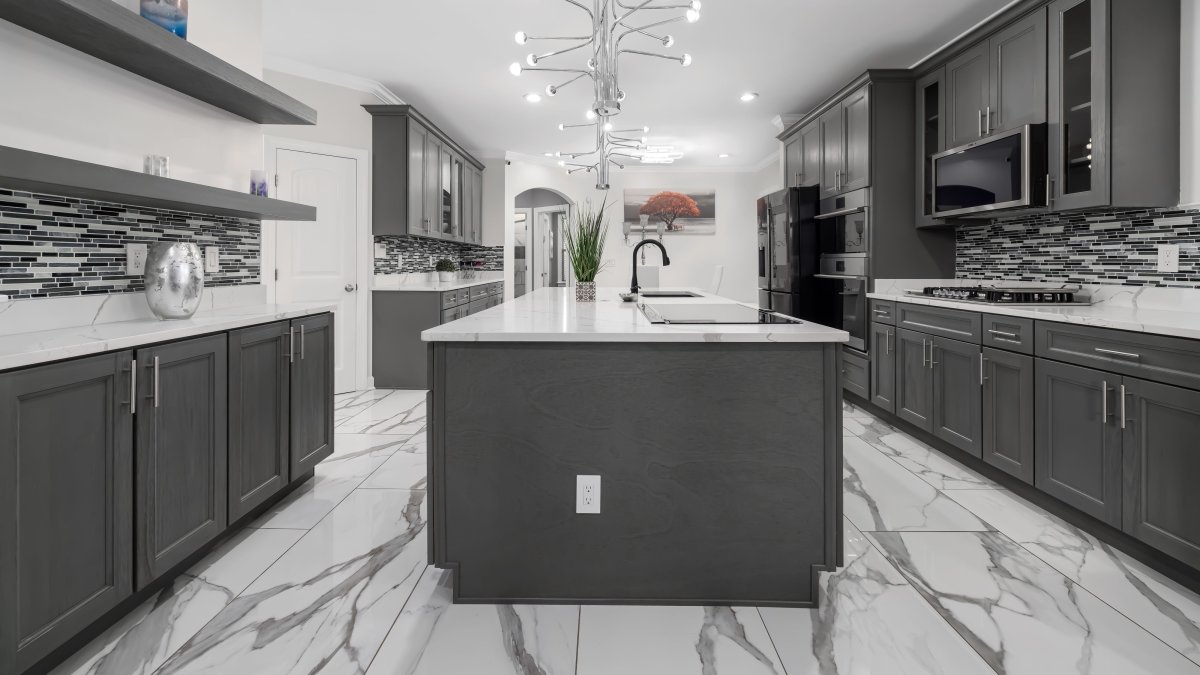
The estimate for two-tone cabinets depends on your kitchen, not a flat rate. Two colors do not automatically double the work, but a few details shape the final number:
- Number of doors, drawers, and cabinet boxes
- Current condition: peeling, damage, or heavy grease buildup adds prep time
- Existing finish: glossy or factory finishes need more careful prep
- Color change: going from dark to light often calls for more coats
- Repairs: filled hardware holes, patched dings, or door fixes
- Island, trim, and crown details: more surfaces mean more labor
- Access and scheduling: how much of the kitchen needs to be protected and kept usable
An on-site look at your kitchen is the only way to get a reliable estimate.
How Do You Keep Two Tone Cabinets Looking Good?
Wipe spills promptly, clean with a mild soap and soft cloth, and avoid abrasive pads. Harsh scrubbing wears down the enamel, especially around handles, the sink, and the range.
- Keep doors clear of heavy steam from kettles and pots.
- Open doors gently for the first few weeks while the finish hardens.
- Keep a small container of matching paint for touch-ups.
- Check caulk lines and edges each year for early signs of wear.
Frequently Asked Questions
Can two tone cabinets work in a small kitchen?
Yes. Keep the colors close in value, use a light shade on the uppers, and place the deeper tone on the lowers or island. That keeps the room feeling open while still adding contrast.
Do you have to replace your cabinets to get a two tone look?
No. If the cabinet boxes and doors are in good shape, painting is a practical way to create the two tone effect. Damaged or water-warped cabinets may need repair before they can be painted.
How long does it take to paint two tone cabinets?
Timing depends on the number of doors and drawers, the condition of the cabinets, and the drying time between coats. Most projects take several days of work, followed by a curing period. A written estimate should outline the schedule.
Are two tone kitchen cabinets still in style?
Two tone kitchens have stayed popular for years, but no one can predict trends. A neutral perimeter with a single contrasting island in a timeless shade like navy, green, or charcoal is the safest way to stay current.
How do you keep painted cabinets from chipping?
Proper prep and primer matter most. After that, a cabinet-grade enamel, enough curing time, and gentle cleaning help the finish resist chips around handles and edges.
Ready to Update Your Kitchen Cabinets?
Two tone kitchen cabinets succeed when the colors, hardware, and finish work together and when the preparation underneath is done right. Custom Colonial Painting has more than 20 years of experience and thousands of completed Connecticut homes, with painters averaging at least 15 years in the field.
We are CT registered, EPA Lead-Safe certified, and fully insured, and we use high-quality paints. You can also verify a Connecticut home improvement contractor registration before you hire anyone.
Learn more about our professional interior painting services for Connecticut homes, and financing is available.
Related Posts