

What’s in This Guide
- What Are VOCs in Paint, and Why Do They Matter?
- Low-VOC vs. Zero-VOC Paint: What Is the Difference?
- Which Paint Brands and Lines Offer Low-VOC and Zero-VOC Options?
- Are Low-VOC and Zero-VOC Paints Better for Nurseries and Allergies?
- How Much More Does Low-VOC or Zero-VOC Paint Cost?
- Is Low-VOC or Zero-VOC Paint Worth It?
- Frequently Asked Questions
- Ready to Choose the Right Paint for Your Home?
Few things announce a fresh paint job like the smell. If you have walked into a newly painted room and felt your eyes sting or your head ache, you already know why low-VOC paint has become a common request from Connecticut homeowners.
The real question is whether low VOC paint and zero VOC paint are worth choosing or whether they are mostly a label. For most interior projects, they are, with a few caveats worth knowing before you buy.
Quick Facts
- VOCs are chemicals that evaporate from paint and can irritate your eyes, nose, and throat.
- Low VOC paint and zero VOC paint both reduce odor, and zero VOC options go a step further.
- Tinting can add VOCs, so ask about the finished color and not just the base.
- Nurseries and sensitive households benefit most from low-odor paint, good ventilation, and early scheduling.
- Costs vary by product line and project scope, so a written estimate is the best way to compare.
What Are VOCs in Paint, and Why Do They Matter?
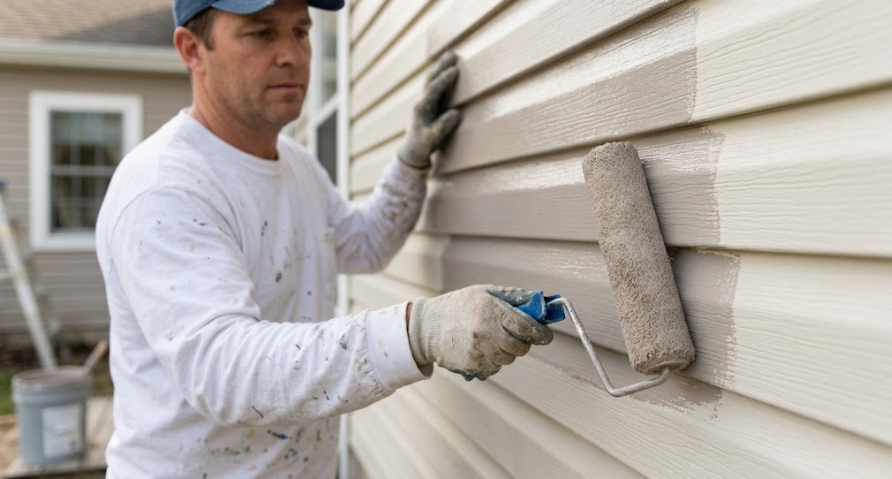
VOCs (volatile organic compounds) are carbon-based chemicals that evaporate into the air as paint dries. In paint, they come mostly from solvents and additives that help the product flow, level, and cure.
VOC content is measured in grams per liter (g/L). The higher the number, the more of those compounds can release into your home while the paint dries.
This matters because indoor air is not as clean as most people assume. The EPA reports that VOC concentrations are often higher indoors than outdoors, sometimes up to ten times higher. Paint is one of many household sources, alongside cleaning products, furnishings, and building materials.
The EPA states that breathing VOCs can irritate the eyes, nose, and throat and may cause headaches or nausea. Effects depend on the amount, the length of exposure, ventilation, and your own sensitivity.
If you want to understand why fresh paint smells the way it does, the short version is that the odor is the evaporation process you can notice. Federal and state rules, including Connecticut’s, cap VOC content in many architectural coatings, so even standard paints today contain far less than they did decades ago.
Low-VOC vs. Zero-VOC Paint: What Is the Difference?
Low VOC paint contains a reduced amount of VOCs, while zero VOC paint contains only trace amounts. Neither label means the paint is chemical-free, and the terms are defined by threshold levels rather than a single universal rule.
|
Feature |
Low-VOC Paint |
Zero-VOC Paint |
|
VOC level |
Reduced (commonly under 50 g/L for interior latex) |
Trace amounts (commonly under 5 g/L before tint) |
|
Odor |
Milder than traditional formulas |
Typically the mildest |
|
Best for |
Most living areas and bedrooms |
Nurseries, sensitive households, closed-up rooms |
|
Tinting effect |
Colorants can add VOCs |
Colorants can add VOCs |
These thresholds reflect common industry labeling practice, so always confirm the figure on the product data sheet for your specific base and sheen.
Why Tinting Changes the Math
A zero VOC base can pick up VOCs when a colorant is added. Deep, saturated colors usually need more colorant than light neutrals. If low odor is the priority, ask your painter for the VOC content of the finished, tinted color.
Does Non-Toxic Paint Actually Exist?
“Non-toxic paint” is a marketing phrase, not a regulated standard. A paint can be low in VOCs and still contain preservatives or other ingredients that affect sensitive people.
Third-party certifications give you something more concrete to check. For example, GREENGUARD Gold certification tests for low chemical emissions indoors, which is useful context when a label promises more than it proves.
Which Paint Brands and Lines Offer Low-VOC and Zero-VOC Options?
Both Sherwin-Williams and Benjamin Moore offer interior lines built around low odor and reduced or zero VOC content. Availability changes, so confirm current specs before ordering.
- Sherwin-Williams: Harmony Interior Acrylic Latex and ProMar 200 Zero VOC Interior Latex
- Benjamin Moore: Natura and Ultra Spec 500 Interior
Sheen is worth weighing alongside the VOC question, since choosing between satin and semi-gloss for each room affects washability, touch-up behavior, and how forgiving the wall looks.
Premium low and zero VOC lines are formulated to perform, but results still depend on the surface, the prep, and the application. A great product on a poorly prepared wall will still disappoint.
Are Low-VOC and Zero-VOC Paints Better for Nurseries and Allergies?

Yes, they are a smart choice for nurseries and allergy-sensitive homes because they produce less odor, but they are not a guarantee of anything. Timing, airflow, and surface prep matter just as much as the label.
Painting a Nursery
For a baby’s room, low-odor paint is the sensible starting point. Schedule the work well ahead of the due date so the room has time to air out. Run fans, open windows when the weather allows, and let the walls fully dry and cure before the room is used.
Drying and curing are not the same thing, and how long paint takes to fully dry and cure depends on the product, humidity, and temperature.
If you are painting in colder months, tips for painting indoors during cold Connecticut winters can help you keep air moving without losing heat.
Expectant parents with specific health concerns should check with their doctor or pediatrician about what is appropriate for their family.
Allergies and Asthma
Low VOC paint can reduce the odor and irritation that bother some people. It does not remove dust, mold, or other allergy triggers. Good prep matters here, including cleaning surfaces and treating mildew before a new coat goes on.
If anyone in your home has asthma or chemical sensitivities, talk with their healthcare provider before the project starts. Plan to keep them out of the work area, and for as long as the odor lingers, since how long paint fumes linger after painting can vary by room and ventilation.
How Much More Does Low-VOC or Zero-VOC Paint Cost?
Low VOC and zero VOC paint may cost somewhat more per gallon than builder-grade standard paint, but pricing is similar to other premium lines. Labor and prep usually have a bigger impact on your final estimate than the VOC rating.
Because the paint is only part of the cost, your estimate will depend on factors like:
- Premium product lines and higher sheens usually cost more than entry-level options.
- Larger rooms and taller ceilings mean more paint, more labor, and more time.
- Repairs, patching, and priming add time when walls are in rough condition.
- Doors, crown molding, and built-ins take longer because they need more precise work.
- Dramatic color changes may need extra coats for full coverage.
- Tight spaces and heavy furnishings can add to labor.
Costs also vary by market, which is why homeowners hiring house painters in Stamford, CT may see different quotes than those elsewhere in the state. Any specific number should come from a written estimate based on your home, not a general range.
Is Low-VOC or Zero-VOC Paint Worth It?

For most interior projects, yes. The lower odor, easier re-entry into the room, and peace of mind in bedrooms and nurseries usually outweigh a modest per-gallon premium.
It is worth the most when:
- You are painting a nursery, kids’ room, or bedroom
- Anyone in your home is sensitive to odors
- You are working in a closed-up or poorly ventilated space
- You plan to use the room soon after painting
It matters less for short-term projects in well-ventilated areas, like a garage or a basement you rarely use. Even then, there is little downside to choosing a better product.
Keep expectations realistic. Low VOC paint is not a substitute for ventilation, and it will not fix a bad prep job.
Local conditions play a role too. What Trumbull homeowners should know before painting applies across Connecticut: season, humidity, and surface condition all affect how a project turns out.
Frequently Asked Questions
Can you use low VOC paint on exterior surfaces?
Yes, many exterior paints are available in low-VOC formulas. Since fumes disperse outdoors, ventilation is less of a concern, so durability, surface type, and Connecticut’s weather swings should drive the choice.
Can you paint over old or oil-based paint with zero VOC paint?
Often, yes, as long as the surface is properly prepared. Glossy or oil-based finishes usually need cleaning, sanding, and a compatible primer so the new coat bonds well. Check the product data sheet or ask your painter before you start.
Is low VOC paint safe for pets?
Lower odor is easier on everyone in the house, including pets, but a non toxic paint claim on the label does not guarantee safety. Keep pets out of the room until the paint is dry and the space has aired out. If your pet has health concerns, check with your veterinarian.
Can you use zero VOC paint in a bathroom or kitchen?
Yes, as long as the product is made for humid, high-traffic spaces. Look for a washable, moisture-resistant formula, and plan the sheen around how much cleaning the walls will see. Good ventilation and proper prep help the finish last.
Can you mix low VOC paint with regular paint?
It is generally not recommended. Different formulations can behave differently, which may affect the finish, adhesion, and the VOC level you were aiming for. Stick with one product line per surface and ask the manufacturer or your painter if you are unsure.
Ready to Choose the Right Paint for Your Home?
Choosing between low VOC paint and zero VOC paint comes down to your household, your timeline, and your budget. For nurseries, bedrooms, and sensitive homes, the upgrade is usually a good value.
Custom Colonial Painting has completed thousands of Connecticut homes over more than 20 years, using Sherwin-Williams and Benjamin Moore products exclusively. Our painters average at least 15 years of hands-on experience, we are CT licensed and EPA Lead-Safe certified, and we carry full insurance. We will help you choose the right product, handle the prep, and leave your home clean.
Explore our professional interior painting services for Connecticut homeowners, with financing available, and request your free estimate today.