
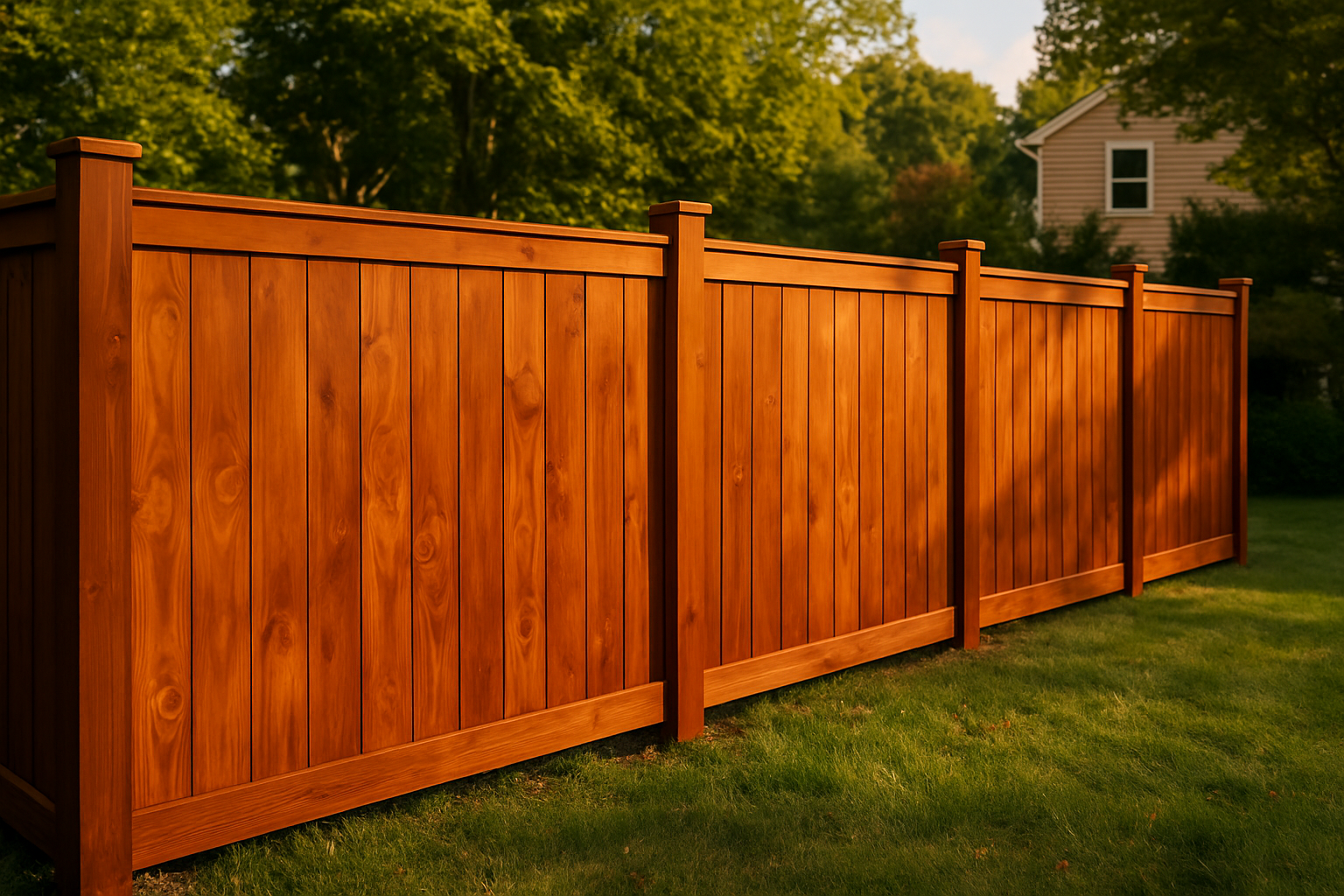
Staining a wood fence protects it from moisture, UV damage, and rot while enhancing its natural appearance. Learning how to stain wood fence correctly extends your fence’s lifespan significantly. Additionally, this process keeps maintenance costs manageable over time.
Table of Contents
- Why Staining Your Fence Is Worth the Effort
- What You Need Before You Start
- How to Stain Wood Fence: Step-by-Step Guide
- Choosing the Right Stain for How to Stain Wood Fence
- DIY vs. Hiring a Professional for How to Stain Wood Fence
- Things to Know About Wood Fence Staining
Key Takeaways
- Clean and dry wood is non-negotiable before any stain application.
- Oil-based stains penetrate deeper; water-based stains dry faster and clean up more easily.
- Stain typically lasts one to eight years depending on product type and exposure, according to HomeAdvisor (2026).
- Professional fence staining in 2026 runs between $655 and $2,118, with a typical project around $1,298, according to Ergeon (2026).
- Regular staining can prolong a wood fence’s lifespan by up to 30%, according to Big Jerry’s Fencing (2024).
- Connecticut homeowners can rely on Custom Colonial Painting for professional-grade exterior staining results.
Why Staining Your Fence Is Worth the Effort
Wood is naturally porous, which means it absorbs water easily. As a result, wood expands and contracts with temperature swings, eventually cracking or rotting if left unprotected. A quality stain acts as a barrier, repelling moisture while allowing the wood to breathe.
The market data backs this up. According to Grand View Research (2026), the stained coating segment held the largest revenue share in the wood fencing market at USD 7.03 billion in 2024. Moreover, this segment is expected to grow at the fastest rate through 2030. Homeowners are clearly prioritizing protective coatings, and for good reason.
From a maintenance standpoint, regular staining prolongs a wood fence’s lifespan by up to approximately 30%, including sealing and staining, according to Big Jerry’s Fencing (2024). That translates to real savings over the years, since replacing fence boards or entire fence panels is considerably more expensive than a periodic stain refresh.
What You Need Before You Start
Gathering the right materials before you begin saves time and prevents mid-project frustration. Here is what you will need:
Tools and supplies:
- Pressure washer or garden hose with a spray nozzle
- Stiff-bristle brush or fence cleaner solution
- Sandpaper (80 to 120 grit for rough spots)
- Drop cloths or plastic sheeting for ground protection
- Painter’s tape
- Pump sprayer, roller with a 3/8-inch nap, or brush
- Stain of your choice (see section below)
- Gloves, eye protection, and a respirator if using oil-based products
Check your local Connecticut weather forecast before scheduling the job. Ideal conditions range between 50°F and 90°F with no rain forecast for at least 24 to 48 hours after application.
How to Stain Wood Fence: Step-by-Step Guide
Learning how to stain wood fence properly is mostly about patience during prep. Rushing through cleaning and drying is the most common mistake homeowners make.
Step 1: Clean the fence thoroughly. Use a pressure washer set to a low-to-medium pressure (around 1,200 to 1,500 PSI for softwood) to remove dirt, mold, algae, and old flaking stain. For stubborn mildew, apply a wood cleaner or a diluted oxygen bleach solution. Then scrub with a stiff brush and rinse completely.
Step 2: Allow adequate drying time. After washing, the fence needs at least 48 to 72 hours of dry weather before staining. Applying stain to damp wood causes adhesion failures. Furthermore, it creates uneven color application.
Step 3: Sand rough areas. Run 80 to 120 grit sandpaper along any splintered boards, weathered grain, or raised fibers. This creates a smoother surface for the stain to penetrate evenly.
Step 4: Protect surrounding areas. Lay drop cloths on the grass or garden beds directly beneath the fence. Tape off any concrete, brick, or metal hardware that you want to keep clean.
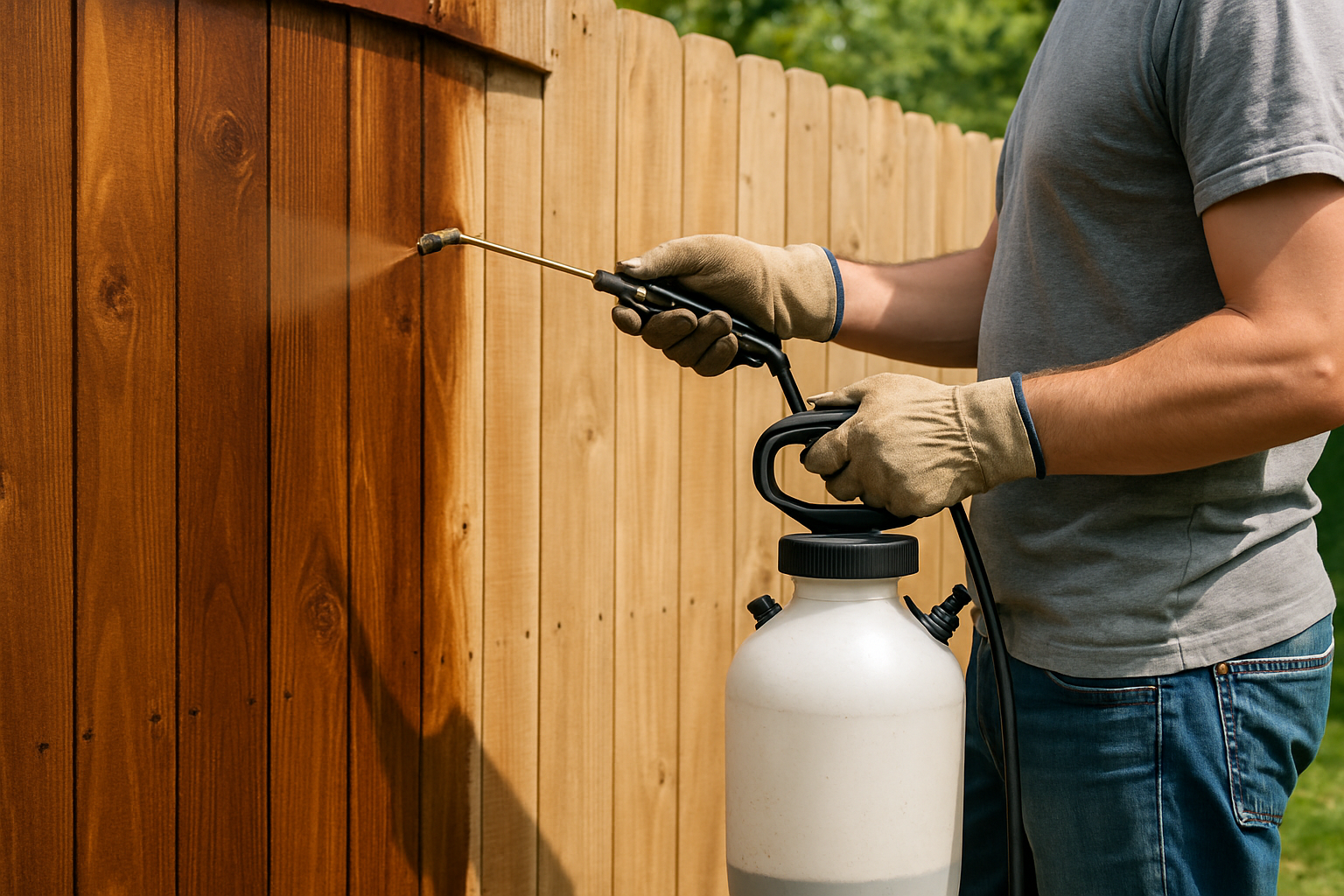
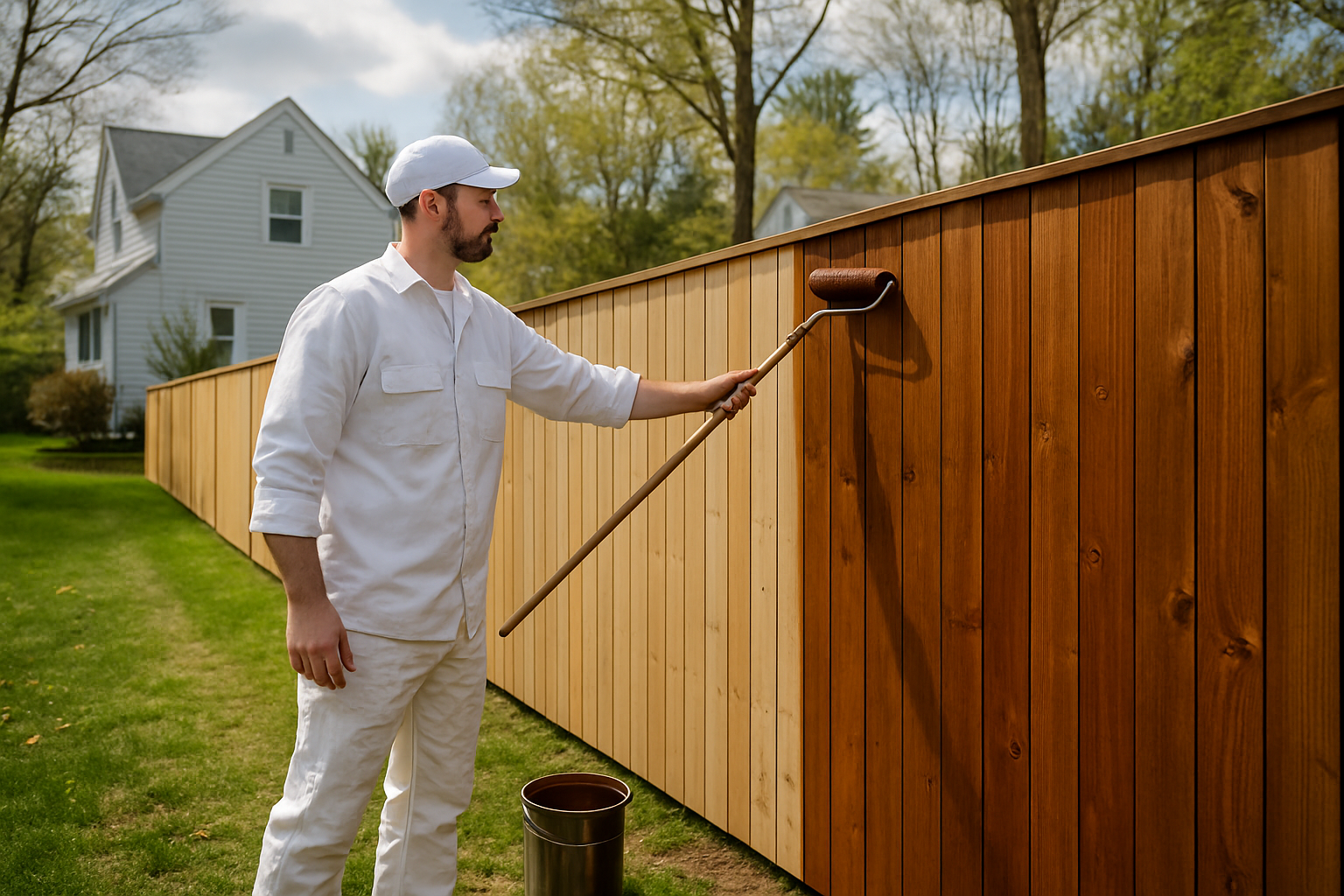
Step 5: Apply the stain. Work in sections of four to six fence boards at a time, using a pump sprayer for speed or a brush for precision. Apply in long, even strokes following the wood grain. Back-brush any drips or pooling immediately.
Step 6: Apply a second coat if needed. Semi-transparent and solid stains often benefit from a second coat after the first has dried per the manufacturer’s instructions. Water-based products typically dry two to four hours, while oil-based products require four to eight hours.
Choosing the Right Stain for How to Stain Wood Fence
Not all stains are created equal, and the right product depends on your fence’s age, wood species, and the look you want.
| Stain Type | Penetration | Durability | Best For |
|---|---|---|---|
| Clear/Transparent | High | 1-2 years | New, unmarked wood |
| Semi-transparent | High | 2-4 years | Weathered wood with visible grain |
| Semi-solid | Medium | 3-5 years | Older wood needing more coverage |
| Solid | Low | 4-8 years | Heavily weathered or repaired wood |
Oil-based stains penetrate deeper into the wood fibers and tend to last longer in harsh climates. However, they require mineral spirits for cleanup and have higher VOC levels. Water-based stains dry faster, emit fewer fumes, and are easier to clean with soap and water.
Connecticut’s climate, with cold winters and humid summers, typically favors a semi-transparent to semi-solid oil-based or alkyd stain for wood fences exposed to full sun and seasonal moisture.
When weighing paint versus stain for other parts of your home, similar considerations apply to choosing an eggshell vs satin paint finish. The sheen level and porosity of the surface both affect how a coating performs long-term.
DIY vs. Hiring a Professional for How to Stain Wood Fence
For a straightforward fence in good condition, experienced DIYers can achieve solid results. However, there are real trade-offs worth considering.
DIY advantages: You enjoy lower material cost, full control over timing, and satisfaction in the work.
DIY limitations: Renting or buying equipment adds expense. Additionally, the physical labor involved in prepping and staining a long fence run requires significant effort. Moreover, you risk uneven application or missed spots.
If your fence has significant rot, old peeling stain, or you are working with a large property, professional results are worth the investment. According to Angi (2026), the average cost to stain a fence ranges between $240 and $4,000, with a national average of $1,900, depending on fence size, condition, and region. Ergeon (2026) puts the typical professional project closer to how much does house painting cost at $1,298.
If you want to understand broader exterior project costs, reviewing information on house painting expenses provides useful context for budgeting multiple exterior projects at once.
Interior projects like learning how to paint kitchen cabinets or understanding how to remove wallpaper properly follow similar prep-first principles. However, exterior staining adds the variable of weather and wood porosity.
Things to Know About Wood Fence Staining
- Stain does not hide imperfections the way paint does. Heavily weathered or discolored wood may need a solid stain or, in some cases, paint.
- Never stain over wet or recently pressure-washed wood. Wait the full 48 to 72 hours, even if the surface feels dry to the touch.
- The DIY segment of the wood fencing market is expected to grow at 6.1% from 2025 to 2030, according to Grand View Research (2024). This reflects more homeowners taking on these projects themselves.
- Temperature affects drying time significantly. In cooler CT weather, water-based stains may take twice as long to cure fully.
- Stain typically lasts one to eight years depending on formulation and exposure, while paint lasts five to ten years, per HomeAdvisor (2026).
Book Your Fence Staining Estimate with Custom Colonial Painting
Your fence takes the full force of Connecticut’s weather year-round. A professional stain job pays for itself in longevity. Contact Custom Colonial Painting for a free, personalized estimate tailored to your property’s fence size, wood type, and condition. The team holds CT HIC #0630904, is EPA Lead-Safe certified, and carries $2M in general liability coverage. Your project is fully protected from day one. Reach out today to schedule your estimate and get your fence stained before the next season changes.
Frequently Asked Questions
Q: How often should you stain a wood fence?
Most wood fences need restaining every two to four years, depending on the stain type and climate exposure. Semi-transparent stains wear faster, especially on south-facing fences that receive direct sun. Solid stains can last up to eight years. Inspect your fence each spring for fading, cracking, or water beading. When water soaks in rather than beading up, it is time to restain.
Q: Can you stain a fence without pressure washing it first?
Skipping pressure washing is not recommended, as surface dirt and mildew prevent the stain from bonding properly. You can hand-scrub with a wood cleaner and a stiff brush if a pressure washer is unavailable. However, the fence must be genuinely clean and fully dry before any product application.
Q: What is the best time of year to stain a fence in Connecticut?
Late spring through early fall, roughly May through September, offers the most reliable conditions for fence staining in CT. Temperatures should be between 50°F and 90°F, with no rain forecast for at least 48 hours. Avoid staining in direct noon sun, which can cause the stain to dry too quickly and leave lap marks.
Q: How many gallons of stain do I need for a wood fence?
Coverage varies by product, but most stains cover 150 to 300 square feet per gallon on rough-sawn or weathered wood. Measure your fence’s total surface area (linear feet multiplied by height, accounting for both sides) and check the manufacturer’s coverage rate. Porous or heavily weathered wood absorbs more and may require a second coat.
Q: Is it better to spray or brush stain on a fence?
Spraying is faster for large fence runs, but brushing ensures deeper penetration into rough wood grain and reduces overspray waste. Many professionals combine both methods. They spray on the stain, then back-brush immediately to work it into the wood. This hybrid approach gives you speed with better penetration.
The Bottom Line on How to Stain Wood Fence
Knowing how to stain wood fence correctly comes down to three non-negotiables: thorough cleaning, full drying time, and the right product for your wood’s condition. Cut corners on any of these steps and you will be restaining again far sooner than necessary.
If your fence is large, in rough shape, or if you simply want the job done right without the weekend labor, Custom Colonial Painting serves all of Connecticut, from Greenwich to Newtown, with painters averaging 15-plus years of experience. Request your free estimate today and protect your fence before the next harsh season arrives.