
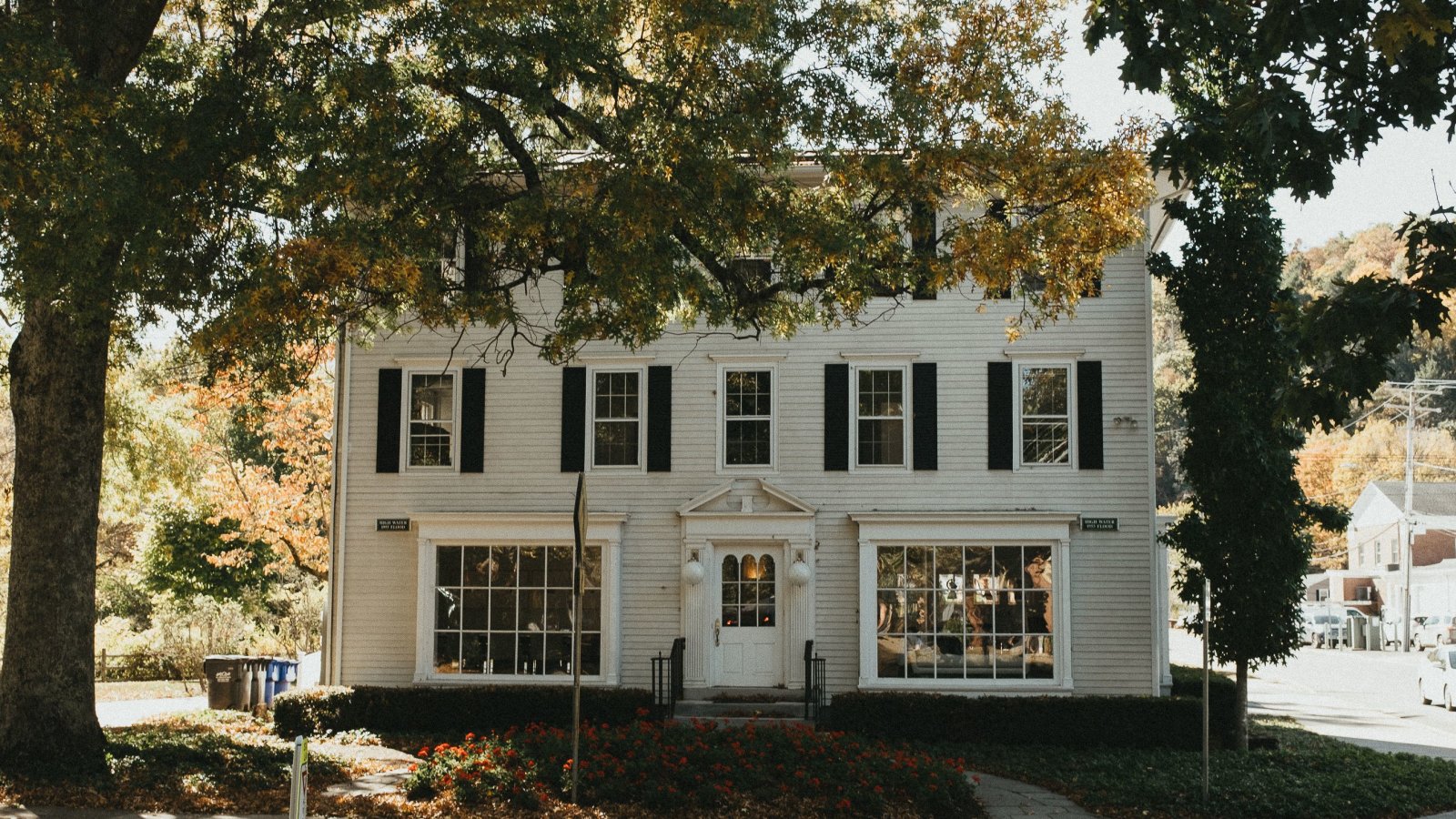
New Canaan falls within Fairfield County, one of Connecticut's most demanding regions for residential exterior paint. New Canaan experiences cold winters, warm summers, and significant annual precipitation, creating challenging conditions for exterior paint performance.
That combination of freeze-thaw cycles, humidity, moisture exposure, and UV radiation places continuous stress on exterior paint systems throughout the year.
Most homeowners choose paint by color or price point. Painters who have spent careers on Connecticut exteriors choose by formulation and performance.
What’s In This Guide
- Why Does New Canaan’s Climate Make Exterior Paint Selection So Difficult?
- What Paint Properties Actually Make a Difference in Connecticut’s Climate?
- Which Exterior Paint Products Hold Up Best in New Canaan, CT?
- How Should a New Canaan Homeowner Prepare an Exterior Before Painting?
- Frequently Asked Questions (FAQs)
- Who Should You Hire to Paint Your Home’s Exterior in New Canaan, CT?
Quick Facts
- Freeze-thaw cycling: the top driver of exterior paint failure in Connecticut.
- 100% acrylic latex with elastomeric flex: the baseline for CT climate conditions.
- Duration, Emerald, and Aura: the commonly recommended choices for homes.
- Surface prep: as critical to paint longevity as product selection.
- Pre-1978 homes: EPA rules require a Lead-Safe certified contractor.
Why Does New Canaan's Climate Make Exterior Paint Selection So Difficult?
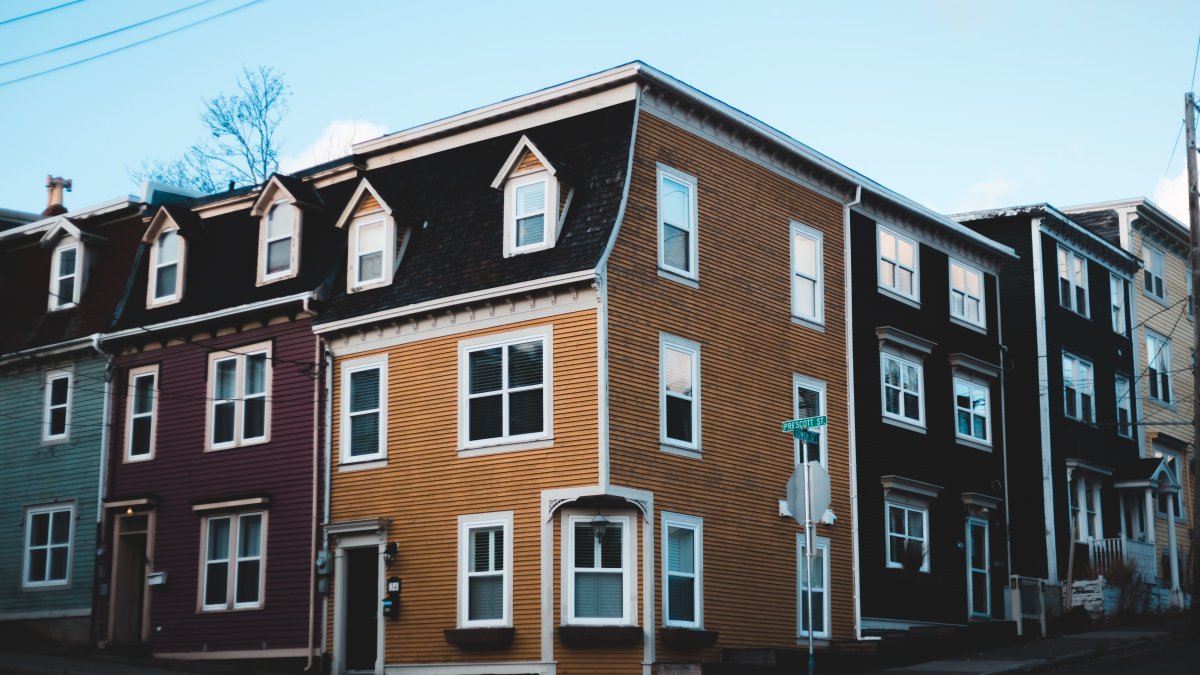
Fairfield County imposes four distinct stressors on exterior paint: freeze-thaw cycling, summer humidity, UV radiation, and wind-driven rain. Each stressor targets a different property of the paint film. No single product performs well against all four unless it is specifically engineered for Northeastern climate conditions.
The four primary climate-driven paint failure modes on New Canaan homes:
- Peeling: Freeze-thaw cycling forces moisture behind the paint film, breaking the bond between the coating and the substrate.
- Cracking: Rigid paint films cannot flex with the seasonal expansion and contraction that naturally occurs in wood siding.
- Mildew growth: High summer humidity levels can create favorable conditions for mildew growth on shaded and moisture-prone surfaces.
- Fading: UV exposure on south and west-facing siding degrades pigment, particularly on darker colors and lower-grade exterior paints.
What Paint Properties Actually Make a Difference in Connecticut’s Climate?
Not every paint marketed as exterior grade is engineered for Northeastern freeze-thaw and humidity stress. Five formulation properties separate durable, climate-appropriate coatings from standard shelf products. Understanding these properties matters more than defaulting to a brand name.
Properties that determine exterior paint durability in New Canaan:
- 100% acrylic latex formulation: Acrylic polymers remain flexible across wide temperature extremes. Oil-based and alkyd paints become brittle over time and crack under repeated freeze-thaw stress. For Connecticut homes, 100% acrylic is the baseline requirement, not a premium upgrade.
- Elastomeric flexibility: Paint film must expand and contract in sync with the substrate beneath it. Wood siding swells in summer humidity and contracts in winter cold. Rigid films crack at that movement boundary, opening pathways for moisture intrusion.
- Mildew-resistant additives: Fungicidal compounds embedded in the formula suppress mildew colonization on north-facing and shaded surfaces where moisture lingers for hours after precipitation.
- UV-stabilized pigments: High-quality pigment systems resist UV breakdown, retaining color saturation and sheen on sun-exposed elevations for several years longer than standard exterior grades.
- High-build or self-priming capability: Thicker dry film fills minor surface irregularities and extends recoat intervals on previously painted substrates in structurally sound condition.
Which Exterior Paint Products Hold Up Best in New Canaan, CT?
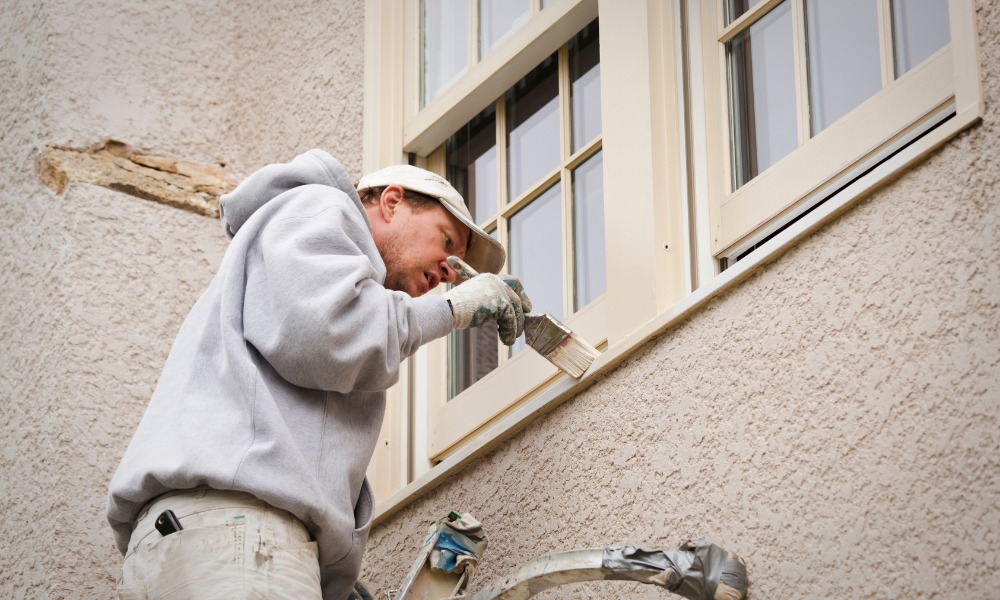
Two manufacturers consistently produce professional-grade products that painters working in Connecticut exteriors return to for long-cycle performance: Sherwin-Williams and Benjamin Moore. Both offer formulations suited to freeze-thaw stress, mildew conditions, and the wood substrate characteristics common to Fairfield County residential properties.
|
Product |
Brand |
Key Technology |
Best Surface |
Primary Climate Advantage |
|
Duration Exterior |
Sherwin-Williams |
PermaProt Technology |
Wood siding, clapboard |
Crack and peel resistance, built-in mildewcide |
|
Emerald Exterior |
Sherwin-Williams |
Advanced resin system |
All siding types |
Superior film durability, application rated down to 35°F |
|
Aura Exterior |
Benjamin Moore |
Color Lock Technology |
Wood, fiber cement |
Fade resistance, strong elastomeric flexibility |
|
ben Exterior |
Benjamin Moore |
100% acrylic formula |
Previously painted surfaces |
Cost-efficient mildew resistance for full-home repaints |
MORE ON THIS TOPIC: What Paint Brands Do Professional House Painters Use?
How Should a New Canaan Homeowner Prepare an Exterior Before Painting?
Surface preparation determines paint longevity more than product selection. High-performance paint applied over a poorly prepped surface will fail prematurely regardless of formulation quality or brand.
Step-by-step exterior preparation for Connecticut homes:
- Inspect the full substrate. Check all wood surfaces for rot, soft spots, open joints, and failing caulk. Address all substrate damage before any coating is applied.
- Power wash the entire exterior. Remove accumulated dirt, mildew growth, chalk residue, and loose paint. Allow 24 to 48 hours of dry time before proceeding.
- Scrape and sand all failing paint. Fully remove any peeling, cracking, or bubbling areas. Feather scraped edges smooth to prevent visible ridges under the new coating.
- Repair damaged wood and recaulk all joints. Fill voids, replace rotted sections, and apply fresh paintable caulk around all windows, doors, trim, and exterior penetrations.
- Prime all bare and repaired surfaces. Bare wood and patched areas require a bonding primer before topcoat application. Skipping primer on bare wood is the most common cause of early adhesion failure on Connecticut homes.
- Verify the application window. Most exterior paints require air and surface temperatures above 50°F with no rain or frost forecast within 24 hours. Some premium exterior coatings, including certain Sherwin-Williams Emerald Exterior formulations, can be applied at temperatures as low as 35°F when manufacturer guidelines are followed.
- Apply the first coat and respect the recoat window. Follow manufacturer-specified dry times. Applying a second coat before the first fully cures traps solvent and causes blistering.
- Apply the second coat and inspect for holidays. Check for thin coverage spots, missed edges, and lap marks. Touch up before the coat fully cures.
Note: The EPA Lead Renovation Repair and Painting Program for homeowners requires that any contractor disturbing paint in a home built before 1978 hold current EPA Lead-Safe certification. New Canaan has a substantial inventory of pre-1978 homes. Verify contractor certification before work begins.
Frequently Asked Questions (FAQs)
What is the best exterior paint brand for Connecticut homes?
Sherwin-Williams and Benjamin Moore are the two most consistently recommended brands among professional painters working on Connecticut exteriors. The top-performing product lines for New Canaan’s climate are Sherwin-Williams Duration Exterior, Sherwin-Williams Emerald Exterior, and Benjamin Moore Aura Exterior. All three are 100% acrylic formulations designed to improve resistance to freeze-thaw cycles, mildew growth, and UV-related color fading.
How long should exterior paint last on a Connecticut home?
A quality exterior paint application with proper preparation and professional installation may last approximately 7 to 10 years on many Connecticut homes, depending on exposure, maintenance, and substrate condition. Homes with deferred maintenance, high UV exposure on southern elevations, or persistent moisture issues may fall short of that range.
What temperature is too cold to paint a house exterior in Connecticut?
Most exterior paints require air and surface temperatures above 50°F, with no rain or frost forecast within 24 hours of application. Sherwin-Williams Emerald Exterior is rated for application down to 35°F. In New Canaan, reliable exterior painting conditions generally run from late April through mid-October. Painting outside that window risks inadequate film formation, adhesion failure, and early peeling.
Do I need a primer before painting the exterior of my Connecticut home?
Yes, in most circumstances. Bare wood, repaired sections, and stain-prone substrates require a dedicated bonding primer before topcoat application. High-build self-priming paints can reduce steps on previously well-painted, structurally sound surfaces. On New Canaan’s older wood-sided homes, a separate primer application is almost always the correct approach.
Is it worth hiring a professional painter instead of DIYing an exterior in New Canaan, CT?
For most full-home exterior projects in New Canaan, professional application is the better long-term investment. Surface prep complexity, lead paint risk on pre-1978 homes, and the direct relationship between application quality and longevity all favor experienced contractors. A properly prepped, professionally applied job using standard products will consistently outlast a DIY application using premium products over inadequate preparation.
Who Should You Hire to Paint Your Home’s Exterior in New Canaan, CT?
Choosing the right contractor determines how long even the best exterior paint products actually perform on your home.
Custom Colonial Painting brings extensive experience painting homes throughout Fairfield County and across Connecticut, including projects in communities similar to New Canaan.
Contact us for a straight answer on what your home needs and a free, no-pressure estimate.