
What’s In This Guide
- Why Proper Deck Prep Is More Important Than the Stain Itself
- Choosing the Right Deck Stain for Your Wood and Climate
- How to Apply Deck Stain: Step-by-Step
- What Deck Staining Costs and When to Hire a Pro
- Frequently Asked Questions
- Protect Your Deck With Professional Staining in Connecticut
Learning how to stain a deck correctly means cleaning the wood thoroughly, choosing the right product for your climate, and applying it under the right conditions. When done properly, a quality stain protects your deck from UV damage, moisture, and rot for three to five years or more.
Quick Facts
- Prep work (cleaning and sanding) determines how well your stain adheres and how long it lasts.
- Semi-transparent stains show wood grain and are ideal for newer, higher-quality wood; solid stains cover imperfections on older or weathered decks.
- Temperature and humidity on application day directly affect how the stain soaks in and cures.
- Two thin coats outperform one thick coat in terms of even coverage and long-term durability.
- In Connecticut, moisture, freeze-thaw cycles, and seasonal humidity make stain selection especially critical.
- Hiring a licensed, experienced contractor can add years to your deck’s life and protect your investment.
Why Proper Deck Prep Is More Important Than the Stain Itself
Most deck staining failures come from inadequate preparation, not a bad product. If you skip the cleaning, sanding, or drying steps, even a premium stain will peel, fade, or fail within a season. Understanding why prep matters helps you avoid costly mistakes.
Cleaning the Deck Surface When Learning How to Stain a Deck
Thorough cleaning is essential because any remaining dirt, mildew, grease, and old finish residue will create a barrier on the wood surface that stops the stain from penetrating the fibers and prevents the product from adhering properly.
Follow this cleaning sequence:
- Sweep away all loose debris, including leaves, dirt, and cobwebs.
- Apply a dedicated deck cleaner or wood brightener with oxalic acid. Scrub with a stiff-bristle brush.
- Rinse thoroughly with a garden hose or low-pressure power washer. Keep the psi at or below 1,200 to avoid raising wood grain.
- Allow the deck to dry completely, typically 48 to 72 hours depending on weather conditions.
If your deck has mildew staining, use a solution formulated with sodium hypochlorite. For older decks that may have been built or painted before 1978, check for lead paint before sanding or scraping. The EPA’s RRP Rule requires certified contractors to follow specific protocols when disturbing lead-based paint. When choosing a painter in New Canaan, CT, look for proper lead-safe credentials. Custom Colonial Painting is EPA Lead-Safe Certified and is equipped to work on older Connecticut homes where lead-based paint may be present.
Sanding and Wood Inspection for How to Stain a Deck
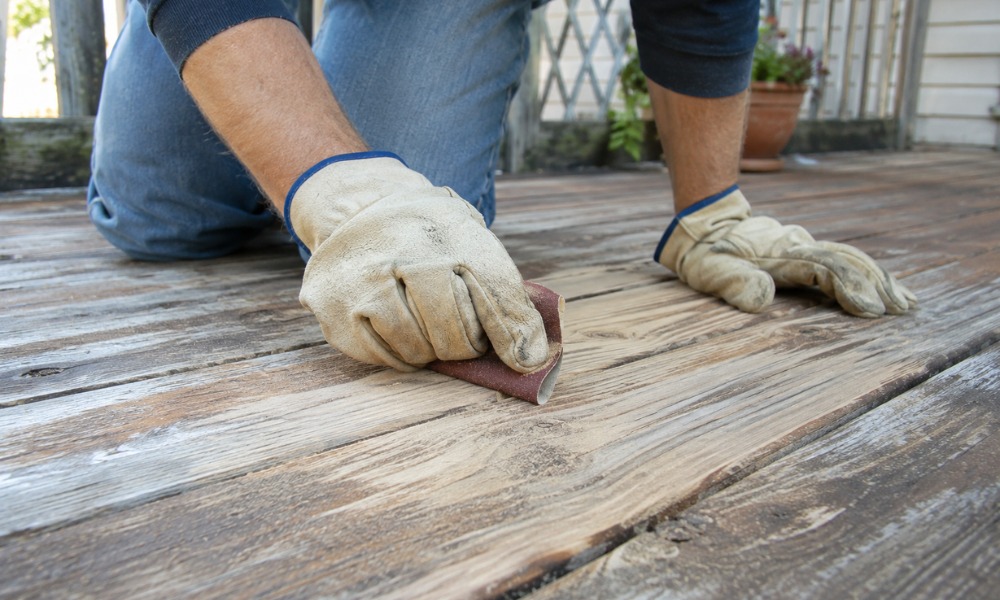
After the deck dries, sand any rough areas, raised grain, or splinters with 80-grit sandpaper. Furthermore, check for soft spots, rot, or loose fasteners. Replace any damaged boards before staining. Nails or screws that are popping up should be countersunk. Staining over structural problems does not fix them; it merely hides them temporarily.
Choosing the Right Deck Stain for Your Wood and Climate
The stain you choose affects not just the look of your deck but how well it performs over time. In New England states like Connecticut, where humidity, hard winters, and freeze-thaw cycles put intense stress on exterior wood, the product decision carries extra weight.
Stain Types at a Glance
|
Stain Type |
Best For |
Transparency |
Recoat Frequency |
|
Clear/Toner |
New cedar or redwood |
Fully transparent |
Every 1-2 years |
|
Semi-Transparent |
Newer wood with visible grain |
Shows grain |
Every 2-3 years |
|
Semi-Solid |
Moderately weathered wood |
Slight grain show |
Every 3-4 years |
|
Solid Color |
Older, weathered, or damaged wood |
Opaque |
Every 4-5 years |
Semi-transparent stains are the most popular choice for homeowners with quality wood who want to preserve the natural look. In contrast, solid stains behave more like paint and work better for decks with significant weathering or inconsistent coloring.
Water-based stains generally dry faster and allow for easier cleanup, while oil-based stains are traditionally noted for their deeper penetration into wood fibers. Advancements in chemical formulations over the past decade have significantly improved water-based products, with many modern high-performance options now providing durability and penetration levels that rival or match traditional oil-based stains.
If you are wondering how New Canaan’s climate affects your product choices, understanding the best paint for New Canaan, CT, weather can help. Connecticut’s seasonal temperature swings, humidity, rain, and winter conditions can all influence how well exterior coatings perform over time.
Oil vs. Water-Based: What the Numbers Say
Modern advancements in chemical formulations have enabled water-based deck stains to achieve durability levels that rival traditional oil-based options. Consequently, many high-quality water-based semi-transparent and solid stains have become a standard, effective choice for homeowners seeking long-term protection and reliable performance in varied climates.
How to Apply Deck Stain: Step-by-Step Guide to Staining Your Deck
Knowing how to stain a deck correctly means more than opening a can and rolling it on. Application technique, timing, and tools all affect your final result.
Timing and Weather Conditions
Never apply stain in direct sunlight, when rain is expected within 24 hours, or when temperatures fall below 50°F or exceed 90°F. The ideal window is a dry, overcast day with temperatures between 60°F and 80°F and humidity below 85%. Check a multi-day forecast before you start.
Tools You Will Need
- Roller with a 3/8-inch nap for flat deck boards
- 3- to 4-inch brush for railings, posts, and between boards
- Paint tray and liners
- Drop cloths or plastic sheeting for protecting the house foundation and landscaping
- Painter’s tape for edges near the siding or stairs
Application Steps for How to Stain a Deck
- Stir the stain well but do not shake it, as shaking introduces bubbles.
- Start at the far end of the deck and work toward the exit point. This prevents stepping on wet stain.
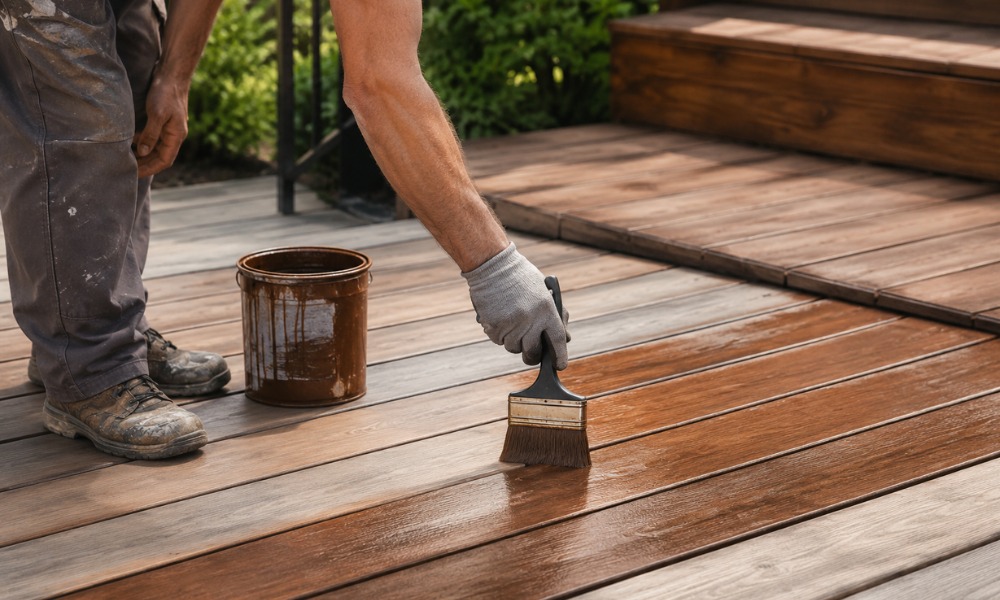
- Apply the stain along the grain of each board in long, even strokes.
- Work one or two boards at a time to avoid lap marks.
- Brush the stain into the gaps between boards. This prevents water from pooling.
- Let the first coat dry according to manufacturer’s instructions, typically four to eight hours.
- Apply a second thin coat if the product and wood type call for it.
- Avoid foot traffic for at least 24 hours and furniture placement for 48 to 72 hours.
What Deck Staining Costs and When to Hire a Pro
DIY deck staining can save money upfront, but it comes with real risks. Improper application voids some product warranties and can mean the work needs to be redone within a single season. Understanding what professional staining costs helps you weigh the options.
Professional deck staining typically costs between $550 and $1,250. This range is primarily determined by the total square footage of your deck and the labor intensity required to achieve a high-quality finish. Larger or more complex structures with intricate railings or multi-level tiers will naturally fall on the higher end of the spectrum, as these require significantly more time for proper prep work and precise application.
For homeowners planning a project, understanding the cost of painting in New Canaan, CT, can help set realistic budget expectations while evaluating local painting contractors.
Pricing for exterior painting and staining projects varies based on surface condition, product selection, and access. The detailed breakdown of pricing helps you understand what to expect for your specific project scope.
Before hiring anyone, it is worth checking for proper registration and insurance. In Connecticut, contractors must be registered under the Home Improvement Contractor (HIC) program governed by CGS Chapter 400, Sections 20-418 through 20-432.
If you are in Fairfield County and planning other exterior work, knowing how to select a qualified painter can help you find the right contractor for your project.

READ MORE: How to Choose a Painter in New Canaan, CT
Frequently Asked Questions
How long should I wait after building or pressure-treating a deck before staining it?
New pressure-treated lumber needs at least 30 to 60 days to dry before you apply any stain.
Wood that is still retaining moisture from the treatment process will repel the stain and prevent it from soaking in properly. You can perform a simple water bead test: sprinkle a small amount of water on the surface, and if it beads up rather than absorbing, the wood is not ready.
How often does a deck need to be re-stained?
Most decks need re-staining every two to five years, depending on the stain type, sun exposure, and foot traffic.
Solid color stains last longer because they provide more coverage, while clear and semi-transparent stains need more frequent reapplication. Horizontal boards typically show wear faster than railings or posts due to direct UV exposure and standing water.
Can I apply a new coat of stain over an old one without stripping first?
You can apply a fresh coat of the same stain type if the existing finish is still bonded well and not peeling or flaking.
If the old stain is failing, peeling, or is a different type, such as going from solid to semi-transparent, you will need to strip it with a chemical deck stripper and re-sand before applying a new product. Applying a new stain over a failing finish guarantees premature failure.
What is the difference between deck stain and deck sealer?
A stain adds color and UV protection while a sealer adds a clear water-repellent barrier, and many modern products combine both functions.
Standalone sealers offer no UV protection, which means wood can still gray and crack from sun exposure. Most deck stain products on the market today include sealer properties, making a separate sealer step unnecessary in most cases.
Is it better to roll or brush deck stain?
Using both tools together gives the best result: roll on the stain for coverage and follow with a brush to work it into the grain and gaps.
A roller speeds up the process on open board surfaces, but a brush is essential for getting stain into the spaces between boards, around fasteners, and into the detail of railings. Brush-only application gives you the most control on smaller or more detailed decks.
Protect Your Deck With Professional Staining in Connecticut
A well-stained deck starts with careful preparation, the right product, and proper application conditions.
Custom Colonial Painting provides professional deck staining services throughout Connecticut. With more than 20 years of experience, our team can evaluate your deck, recommend an appropriate stain and finish, and handle the preparation and application process from start to finish.