
What’s In This Guide
- What Determines the Cost of Painting a Home in Newtown?
- Why the Same Square Footage Can Price So Differently
- What Prep Work Actually Adds to the Estimate
- A Note on Older Newtown Homes and Lead Paint
- How to Get an Accurate Painting Estimate
- When Should a Homeowner Call a Professional Painter?
- Frequently Asked Questions
- Ready to Get a Painting Estimate for Your Newtown Home?
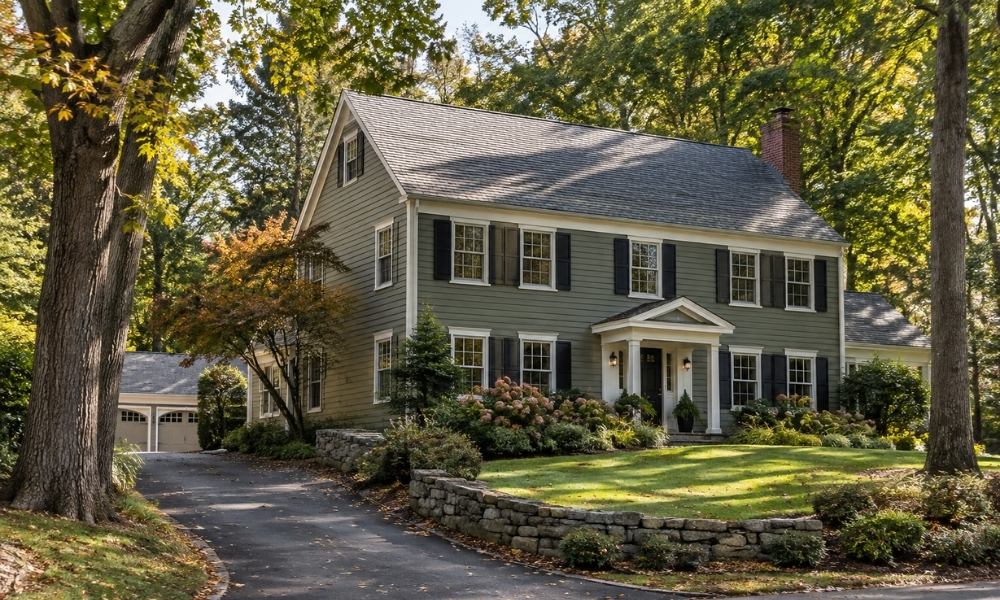
Homeowners across Newtown often start their painting project with the same question: what will this actually cost? It's a fair question, and one that rarely has a single answer. A colonial on Sugar Street and a raised ranch near Lake Zoar can require completely different scopes of work, even if the square footage looks similar on paper.
Quick Facts
- No two Newtown homes are priced the same. Square footage, siding type, and current paint condition all affect the estimate before labor is even factored in.
- Prep work drives cost more than paint choice. Scraping, sanding, caulking, and priming on older Newtown homes can add significant time to a project.
- Homes built before 1978 carry a lead paint consideration. The EPA’s Renovation, Repair, and Painting Rule requires lead-safe practices when covered work disturbs painted surfaces in pre-1978 properties.
- Seasonal timing affects both price and scheduling. Exterior work depends on safe temperature and humidity conditions, and booking outside peak season can open up more availability.
- A written, itemized estimate helps protect against surprise costs. Scope, prep detail, product brand, and coat count should all appear in writing before work begins.
What Determines the Cost of Painting a Home in Newtown?
Painting costs in Newtown depend on the size of the home, the surface material, the condition of the existing paint, and how much prep work the project requires. Labor and materials layer on top of those variables, which is why two similarly sized homes can receive very different quotes.
National data offers a useful starting point for context. Exterior painting averages around $3,177 nationally, with a typical range between roughly $1,800 and $4,600. Interior painting averages just over $2,000 nationally, with most projects landing between $350 and $5,800 depending on the number of rooms and the amount of trim, ceiling, and detail work involved.
These figures are useful for general budgeting, but they are national averages. They do not account for Fairfield County labor rates, seasonal weather exposure, or the age and architectural detail common in Newtown's housing stock. The only reliable way to know what a specific home will cost is through a site visit and a written estimate.
Why the Same Square Footage Can Price So Differently
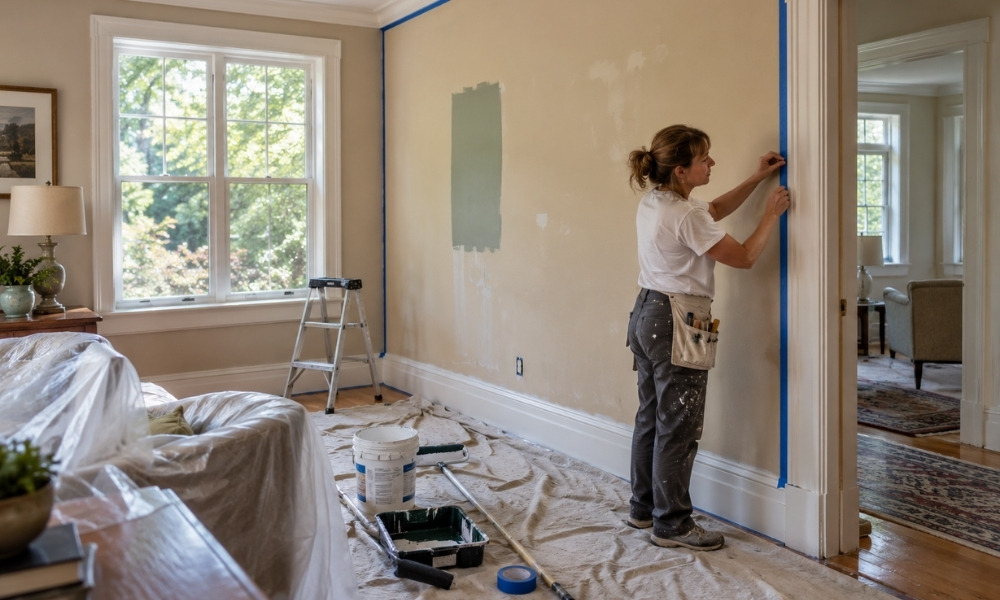
Two homes with identical floor plans can still land on opposite ends of the pricing range. The difference usually comes down to condition.
Factors that shift the estimate up or down include:
- Surface material. Wood clapboard, vinyl, aluminum, stucco, and fiber cement all require different prep steps and products.
- Paint condition. Peeling, chalking, or mildewed surfaces require scraping, washing, and spot priming before a single coat goes on.
- Trim and architectural detail. Shutters, columns, multi-pane windows, and decorative molding all add labor hours that flat wall space does not.
- Number of stories. Second- and third-story work often requires ladders or scaffolding, which adds time and equipment cost.
- Coat count. Major color changes, especially from dark to light, frequently require an extra coat for full coverage.
- Accessibility. Wooded lots, steep driveways, or homes set back from the road can affect setup time for equipment and materials.
Homes in Newtown’s older neighborhoods, including many properties near the town center and along the Housatonic River corridor, often carry more of these variables at once. A colonial with original wood trim and decades of repaints is a different project than a newer build with vinyl siding in good condition.
What Prep Work Actually Adds to the Estimate
Surface preparation is usually the single biggest factor behind why one quote is higher than another. It is also the step most likely to get shortened in a low bid.
Typical prep steps for exterior projects include:
- Pressure washing to remove dirt, mildew, and loose debris
- Scraping peeling or failing paint back to a sound edge
- Sanding rough transitions so new paint bonds evenly
- Caulking gaps at trim, windows, and joints
- Spot priming bare wood or repaired areas
- Full-surface priming where adhesion is compromised
Skipping or rushing any of these steps shortens the life of the finished job, regardless of how good the paint itself is. A contractor who walks through each of these steps during the estimate is providing a more accurate, and usually more durable, estimate than one who bases it on square footage alone.
READ MORE: What Sheen Is Best for Your Exterior Painting Project
A Note on Older Newtown Homes and Lead Paint
Connecticut has a meaningful share of housing built before 1978, and Newtown is no exception. Homes from that era may contain lead-based paint in older layers, which changes how prep work should be handled.
The EPA’s Renovation, Repair, and Painting (RRP) Rule requires contractors who disturb painted surfaces in pre-1978 homes, child care facilities, and preschools to follow lead-safe work practices when the work falls under the rule. If a home’s paint history is unknown, that should be discussed with a contractor before any scraping or sanding begins. This is a safety and compliance factor, and it should be evaluated by a qualified professional rather than assumed.
How to Get an Accurate Painting Estimate
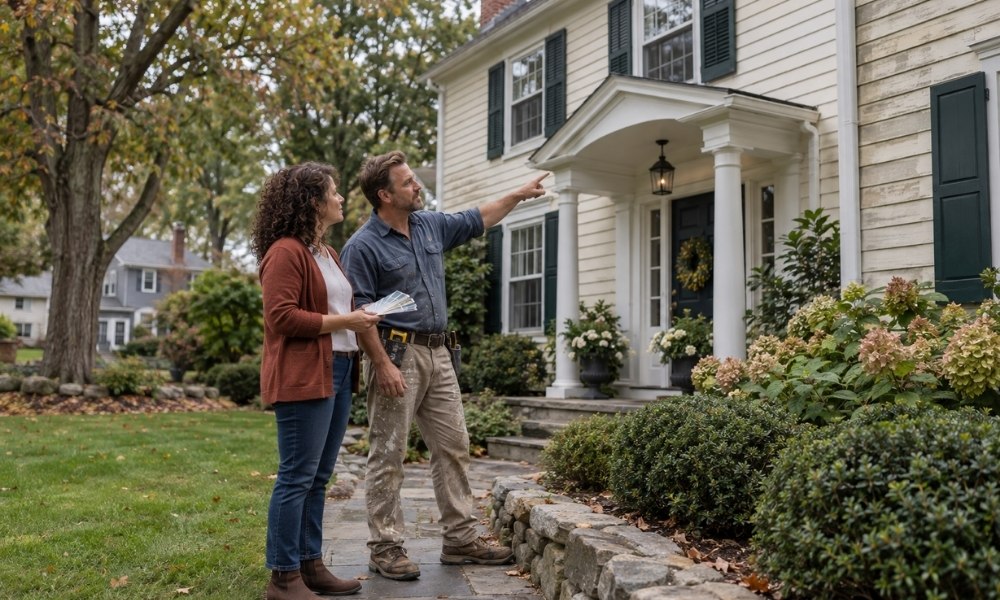
An accurate estimate depends on giving a contractor enough information to see the actual scope. A short walkthrough almost always produces a more reliable quote than a phone estimate.
Steps to prepare for an estimate visit:
- Note visible problem areas. Peeling, cracking, water stains, or soft wood should be pointed out during the walkthrough.
- Decide on scope early. Confirm whether trim, shutters, doors, and detached structures like a garage are included.
- Ask about the paint brand and product line. Different paint grades, finishes, and product lines perform differently over time.
- Confirm the number of coats. This is especially important for major color changes.
- Get the estimate in writing. A written quote should list scope, prep steps, product details, and timeline.
- Compare quotes on scope, not just price. The lowest number is not useful if it excludes prep work another contractor included.
Because so many of these variables are specific to a single home, estimate ranges should always be treated as a starting point rather than a final number. Costs vary based on the scope of work, site conditions, surface material, prep needs, paint selection, and accessibility of the property, and no two projects are priced identically.
When Should a Homeowner Call a Professional Painter?
A professional estimate makes sense any time a project involves more than a single, low-traffic room in good condition. Peeling paint, visible wood damage, multi-story exteriors, or homes with heavy trim detail all benefit from a professional assessment before work begins.
Connecticut requires home improvement contractors, including many residential painting contractors, to hold an active registration through the Department of Consumer Protection. Verifying that registration, along with liability insurance and workers’ compensation coverage, helps protect the homeowner if something goes wrong on-site.
A qualified contractor should also be able to walk through prep steps, product recommendations, and timeline expectations clearly, without vague answers about what the estimate actually covers.
Frequently Asked Questions
How much does it cost to paint a house in Newtown, CT?
Cost depends on home size, siding material, surface condition, and scope of work. National averages offer general context, but an accurate number requires a site-specific estimate based on the home’s actual condition.
Does the age of my home affect the painting estimate?
Yes. Older homes often require more extensive prep, including scraping, sanding, and priming, and may involve lead-safe work practices if built before 1978. These factors typically add time and cost compared to a newer, well-maintained surface.
What is included in a typical painting estimate?
A thorough estimate should outline the scope of work, surface prep steps, paint brand and finish, number of coats, timeline, and total cost. Estimates that skip prep detail are harder to compare fairly against other quotes.
Is it cheaper to paint in the off-season?
Interior painting can often be scheduled more flexibly during colder months, which may open up availability. Exterior painting depends on a safe temperature and humidity window, so scheduling is typically more limited to the warmer months of the year.
How do I know if a painting quote is too low?
An unusually low quote may signal missing prep work, lower-grade paint, or incomplete insurance coverage. Comparing quotes on scope and detail is the more reliable way to evaluate value.
Ready to Get a Painting Estimate for Your Newtown Home?
Custom Colonial Painting has completed thousands of residential painting projects across Connecticut, working exclusively with Sherwin-Williams and Benjamin Moore products on every job. For homeowners in Newtown weighing scope, prep needs, and timing, a site visit is the most reliable way to understand true project cost.
Ready to transform your home? Contact us today to schedule your complimentary site visit and request a precise, itemized estimate for your project.