
What's In This Guide
Choosing the best white paint for trim sounds simple until you are staring at dozens of whites that look identical under store lighting. Then you get the sample home, and the white you picked reads yellow, gray, or oddly harsh next to your walls.
Trim is a small share of a room's surface, but it frames every wall, door, and window. The right white, the right sheen, and the right relationship to your wall color can change how finished a room feels. Here is how to choose by wall color, by sheen, and by whether trim should match the walls at all.
Quick Facts
- The best white paint for trim depends on your wall color, not on one universal shade.
- Warm walls pair with softer whites, while cool and deep walls pair with crisper ones.
- Semi-gloss or satin gives trim durability and a defined edge against flatter walls.
- Trim does not have to match the walls, but it should look intentional next to them.
- Test samples on the actual trim, in your actual light, before you commit.
What Is the Best White Paint for Trim?
There is no single best white. Softer warm whites such as Benjamin Moore White Dove or Sherwin-Williams Pure White suit most traditional Connecticut homes, while crisper whites such as Extra White or Chantilly Lace suit cooler, more modern palettes.
Whites are not blank. Each carries an undertone (yellow, gray, blue, or pink) that shows up the moment it sits next to a wall color, which is why learning how to choose the right warm white paint colors takes more than a quick swatch.
Brightness matters too, measured as light reflectance value (LRV) on a scale from 0 to 100. Pure White and Extra White both sit in the mid-80s, which is why they read clean without feeling clinical.
Sherwin-Williams and Benjamin Moore are the only two brands we use, so here are the trim whites we reach for most often.
|
White |
Brand |
How It Reads |
Works Best With |
|
Pure White |
Sherwin-Williams |
Soft, slightly warm |
Beige, greige, and warm gray walls |
|
Extra White |
Sherwin-Williams |
Clean, slightly cool |
Cool grays, blues, and modern palettes |
|
Alabaster |
Sherwin-Williams |
Creamy and gentle |
Warm neutrals and detailed molding |
|
White Dove |
Benjamin Moore |
Soft and creamy |
Warm walls, colonial and farmhouse rooms |
|
Simply White |
Benjamin Moore |
Clean, balanced warm |
Almost any wall color |
|
Chantilly Lace |
Benjamin Moore |
Crisp and near-neutral |
Deep colors and cool palettes |
Which White Trim Works Best With Your Wall Color?
Match the temperature of the white to the temperature of the wall. Warm walls want a softer white, cool walls want a crisper one, and deep colors want the cleanest white you can find.
Many Connecticut homes, from center-hall colonials in Glastonbury to Cape Cods near Guilford, have trim with multiple layers of old paint and plenty of character. Painting trim white on those homes rewards a softer, warmer white that respects the age of the woodwork. If an older room still has wallpaper, deciding whether painting over wallpaper is worth it comes before choosing a trim white.
Warm Beige, Cream, and Greige Walls
Pure White, White Dove, and Alabaster keep the room cohesive. A stark, cool white beside cream walls can make the walls look dingy, even when they are freshly painted.
Cool Gray, Blue, and Green Walls
Extra White and Chantilly Lace hold their own here. A creamy white on trim next to a cool wall can look dirty or aged rather than deliberate.
Navy, Charcoal, and Other Deep Colors
Deep walls call for contrast, so Simply White or Chantilly Lace usually works best. The trim carries the room at this point, which makes prep quality (smooth caulk lines, filled nail holes) matter even more.
White and Off-White Walls
Stay in one family. Go one step brighter on the trim, or use the same white and let sheen create the separation, which we cover below.
What Sheen Is Best When Painting Trim White?
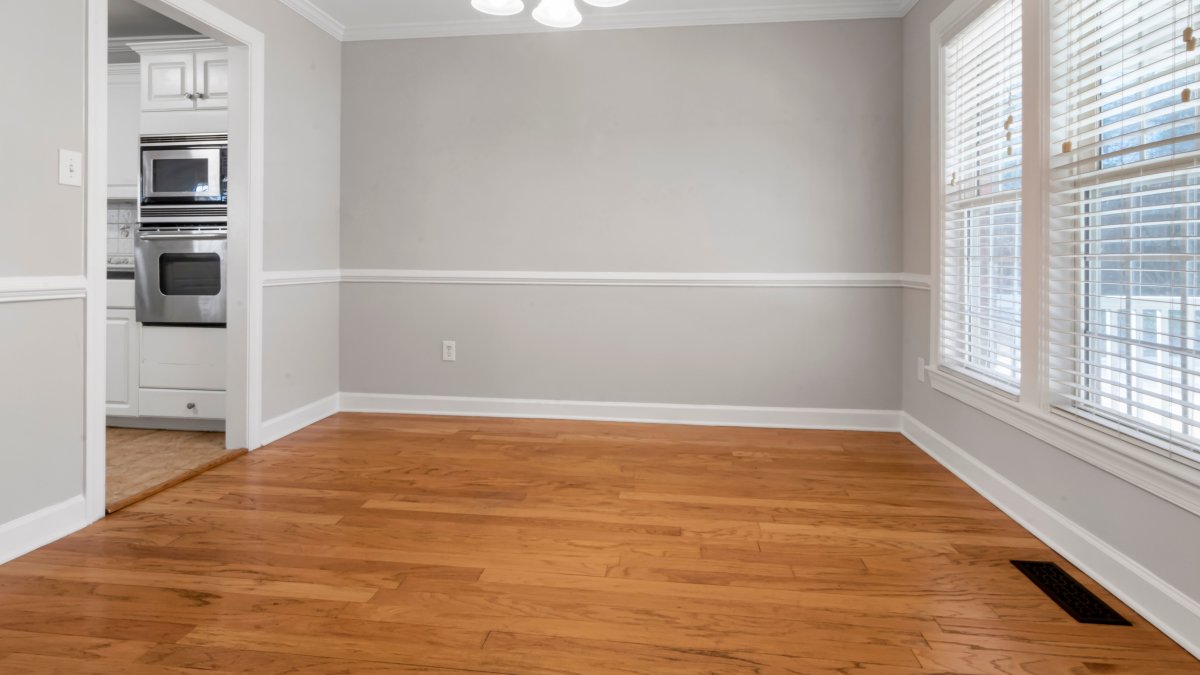
Semi-gloss is the traditional choice, and satin is the softer modern option. Both are durable and wipeable, and either pairs well with matte or eggshell walls.
Semi-Gloss for Durability and Crisp Edges
Semi-gloss is easy to wipe clean and stands up to scrapes, which is why semi-gloss is widely recommended for baseboards and doors. The tradeoff is that it reflects light, so it shows every flaw underneath. It is also the usual pick for stair railings, where painting stairs and banisters without making a mess takes careful prep and cure time.
Satin for a Gentler Look
Satin is more forgiving on older wood and imperfect surfaces. Satin adds contrast against walls painted in matte or eggshell without looking glossy. Sheen names are not standardized across brands, so semi-gloss from one maker can look shinier than another's. Ask for a drawdown or sample in the exact product line before you buy.
Sherwin-Williams also suggests gloss trim against low-luster walls adds depth, and notes that higher sheen draws attention to surface flaws. In practice, that means sanding, filling, caulking, and priming are not optional on trim.
What About Pre-1978 Homes?
Older Connecticut homes may have lead-based paint in the layers under your trim. Sanding or scraping those surfaces can release dust, and contractors working on pre-1978 homes must follow the EPA's Renovation, Repair, and Painting rule for pre-1978 homes. If you suspect lead, have it tested before any prep begins.
Should Trim Match the Walls?
No. Trim can contrast, match, or sit somewhere in between. What matters is that the choice looks deliberate, and that it stays consistent from room to room.
|
Approach |
The Look |
Works Best For |
|
White trim, colored walls |
Classic, crisp, defined |
Colonials, Cape Cods, and most traditional homes |
|
Same color on walls and trim, different sheen |
Calm, tonal, architectural |
Small rooms, or trim with awkward proportions |
|
Same white on walls and trim, different sheen |
Bright and seamless |
Light-filled rooms and modern interiors |
|
Darker or colored trim |
Dramatic and moody |
Dens, libraries, and period details |
When Contrast Is the Better Call
Contrast makes trim read as architecture. It outlines windows, defines doorways, and makes a room look finished, which is why white trim on colored walls remains the most common approach. It provides a clean boundary that instantly draws the eye.
When Matching Makes Sense
Matching works when you want the room to feel quieter or bigger, or when the trim itself is plain and not worth highlighting. Keep the sheen different (flat or matte walls, satin trim) so the woodwork still has some definition.
Whatever you choose, keep baseboards, door casings, and window trim consistent through connected rooms. Doors usually follow the trim, so it helps to know how to paint interior doors for a smooth finish.
How Do You Test a White Before Painting Trim?
Test on the trim itself, next to the wall, and look at it in the morning and evening. A swatch on a card tells you very little.
- Paint a section of trim or a sample board. Two feet of baseboard or casing beside the wall shows the real relationship.
- Check it three times a day. North-facing rooms tend to pull whites cooler, while south-facing rooms warm them.
- View it under your actual bulbs. Warm bulbs and daylight can make the same white look completely different.
- Compare two or three whites side by side. The differences between close whites only show up in direct comparison.
- Look at it against the floor and ceiling. Wood tones and ceiling color change how a white reads.
Frequently Asked Questions
Should the ceiling and trim be the same white?
They can be, and it is a clean, popular choice. Many people use a flat ceiling finish and a semi-gloss or satin trim finish in the same white so the sheen does the separating.
Why does my white trim look yellow?
Warm undertones, low light, and aging oil-based enamels are the usual causes. Modern waterborne trim enamels generally resist yellowing better, and switching to a cooler white can help in dim rooms.
Can I paint just the trim without repainting the walls?
You can, but fresh bright trim can make tired walls look dingy by comparison. Check the wall condition first, and if dents or cracks need patching, factor in the cost of drywall repair before you repaint. At a minimum, touch up where the two meet.
How many coats of paint does white trim need?
Most trim needs two finish coats over properly primed surfaces. White can look streaky or translucent after one coat, especially over a darker color, so plan for the second coat and allow full drying time between them.
How do you keep white trim looking clean?
Wipe baseboards and door casings with a soft damp cloth and mild soap every few months, since dust and scuffs show most at floor level. A semi-gloss or satin finish makes this easier, and keeping a small amount of the original paint on hand lets you touch up nicks before they spread.
Ready to Start Painting Trim White?
Picking the right white is half the work. The other half is prep, clean caulk lines, and a smooth finish that holds up to daily wear, and that is where an experienced crew makes the difference.
Custom Colonial Painting has more than 20 years of experience and thousands of completed homes across Connecticut. As a locally owned and operated business, our team specializes in full-service residential interior and exterior painting. We take pride in delivering meticulous craftsmanship, using high-quality paints, and offering personalized color consultations to ensure long-lasting results for every home.
If you want expert help with trim, walls, or a full refresh, explore our professional interior painting services for Connecticut homes and trim, or request a free estimate today.
Related Posts