
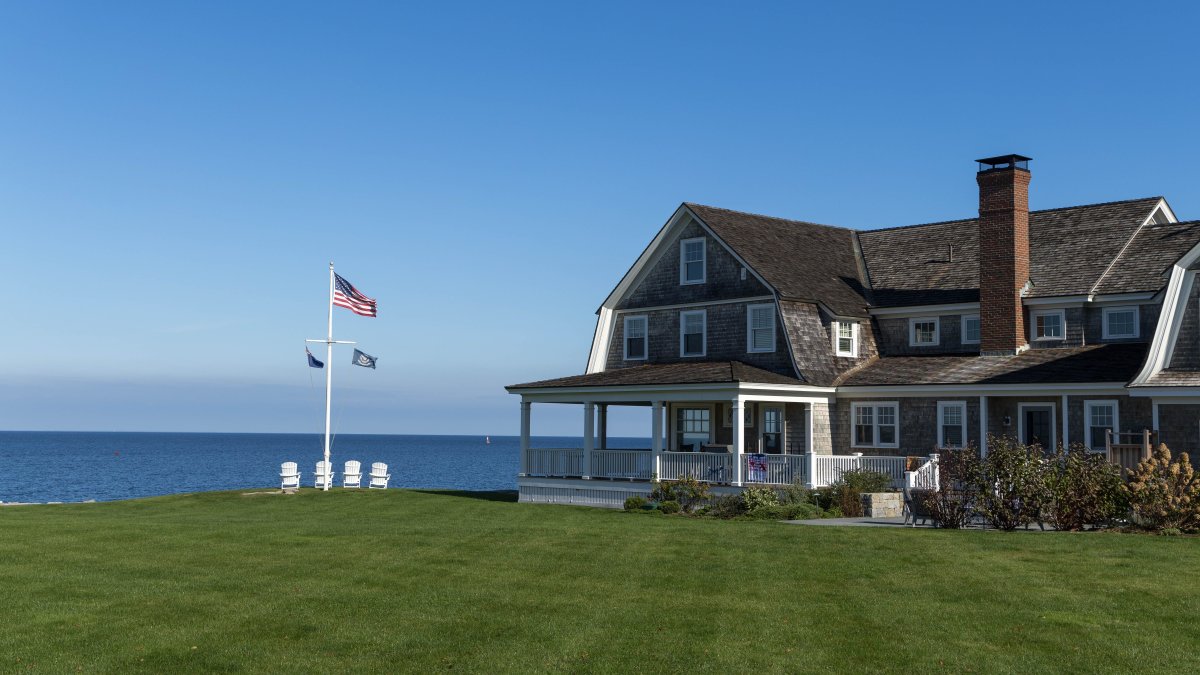
Greenwich’s coastal position along Long Island Sound creates exterior painting conditions that most standard products are not built to handle. Salt air, sustained humidity, hard freeze-thaw winters, and direct summer UV exposure combine into a climate profile that can shorten paint lifespan more quickly than many inland Connecticut settings.
Choosing the right exterior paint for a Greenwich home is a performance decision, not a preference one.
What’s In This Guide
- Why Does Greenwich, CT, Weather Cause More Paint Damage Than Inland Connecticut?
- What Paint Properties Actually Matter for Homes Near the Connecticut Shoreline?
- What Are the Best Exterior Paints for Greenwich, CT, Homes Right Now?
- How Do You Prepare a Greenwich Home’s Exterior for Paint That Actually Lasts?
- Frequently Asked Questions (FAQs)
- Ready to Get an Exterior Paint Job Built for Greenwich Weather?
Quick Facts
- 100% acrylic latex handles coastal humidity and freeze-thaw cycles best.
- Salt air from Long Island Sound accelerates exterior paint failure.
- Sherwin-Williams Emerald and Benjamin Moore Aura are the top picks for homes.
- Surface prep determines how long any exterior paint job actually lasts.
- Painters working on pre-1978 homes must carry EPA Lead-Safe certification.
Why Does Greenwich, CT, Weather Cause More Paint Damage Than Inland Connecticut?
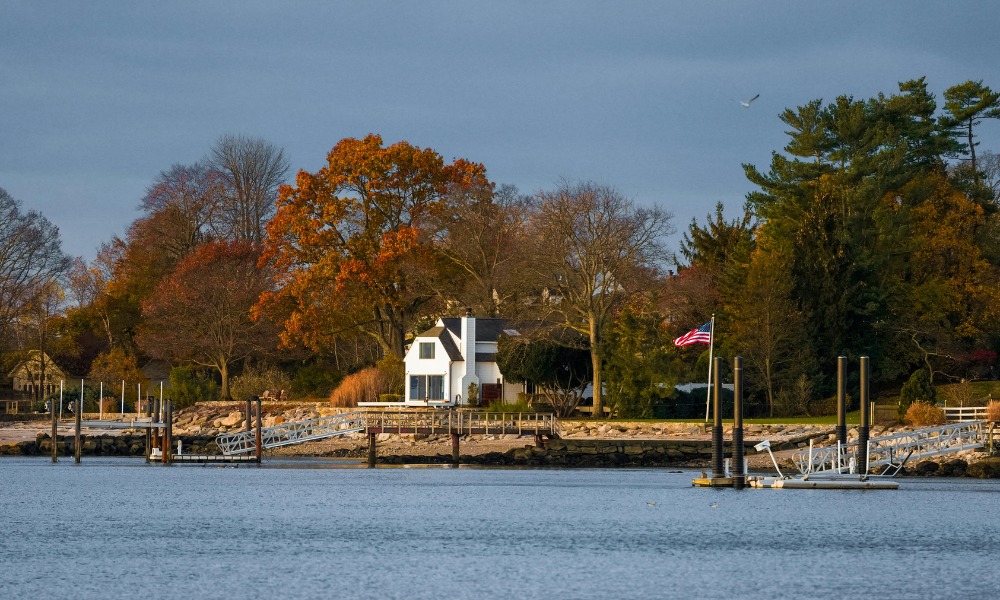
Greenwich faces a more aggressive set of climate stressors than inland Connecticut towns. The town’s waterfront position on Long Island Sound introduces salt air, elevated year-round humidity, and wind-driven rain events that communities like Simsbury, Farmington, or Wallingford simply do not contend with at the same intensity.
Paint products formulated for standard New England conditions routinely underperform on Greenwich homes.
The five climate stressors that shorten exterior paint life in Greenwich:
- Salt air corrosion: Sodium chloride particles accelerate oxidation on metal substrates and weaken paint-to-substrate adhesion on wood and fiber cement
- Coastal humidity: Sustained moisture above 70% RH promotes mildew growth beneath paint films and interferes with proper curing during application
- Freeze-thaw cycling: Connecticut’s transitional seasons drive repeated expansion and contraction in wood siding, cracking paint films that lack sufficient elasticity
- UV exposure: South- and west-facing facades on Long Island Sound receive unobstructed summer sun, accelerating fade and chalking in mid-grade products
- Wind-driven rain: Coastal storm events push water into joints, gaps, and unsealed edges, causing moisture intrusion behind the paint film
Freeze-thaw cycling and salt air are the two leading causes of premature exterior paint failure on Greenwich homes. Wood siding expands and contracts with every humidity and temperature shift.
Paint that lacks elasticity cracks within two to three seasons rather than lasting the expected seven to ten years. Salt deposits, often invisible on the surface, actively degrade adhesion between coats and substrate over time.
What Paint Properties Actually Matter for Homes Near the Connecticut Shoreline?
Four properties are non-negotiable for exterior paint on a Greenwich home: moisture resistance, film flexibility, mildew resistance, and UV stability.
Products that perform reliably in drier or moderate climates often fail on the Connecticut coast because they are not engineered for the combination of sustained humidity and hard freeze cycles.
Which Paint Formulation Handles Coastal Humidity Best: Latex or Oil-Based?
100% acrylic latex outperforms oil-based formulations for coastal Connecticut homes. Oil-based products offer strong initial adhesion but lack the film flexibility needed to survive Greenwich’s freeze-thaw cycles without cracking.
|
Property |
100% Acrylic Latex |
Oil-Based |
|
Film flexibility |
High |
Low |
|
Moisture resistance |
Excellent |
Good |
|
Dry time |
1 to 2 hours |
6 to 24 hours |
|
Mildew resistance |
Excellent (with additives) |
Moderate |
|
Longevity on coastal wood |
7 to 10 years (with proper prep) |
5 to 7 years |
|
Minimum application temperature |
35°F |
50°F |
The flexibility advantage of acrylic latex is decisive in coastal New England. As wood substrates move with seasonal moisture changes, the paint film needs to move with them rather than fracture.
What Paint Finish Works Best for Exterior Siding in Greenwich, CT?
Satin finish is the practical standard for most Greenwich home siding. It provides enough sheen to repel surface moisture without amplifying imperfections the way semi-gloss does on weathered or textured surfaces.
- Flat/Matte: Rough-textured stucco or masonry where light reflection is undesirable
- Satin: Wood clapboard, vinyl, and fiber cement siding (the recommended finish for most Greenwich homes)
- Semi-Gloss: Trim, doors, shutters, and architectural details where durability and cleanability take priority
- Gloss: Metal railings and specialty trim applications
MORE ON THIS TOPIC: What Paint Brands Do Professional House Painters Use?
What Are the Best Exterior Paints for Greenwich, CT, Homes Right Now?
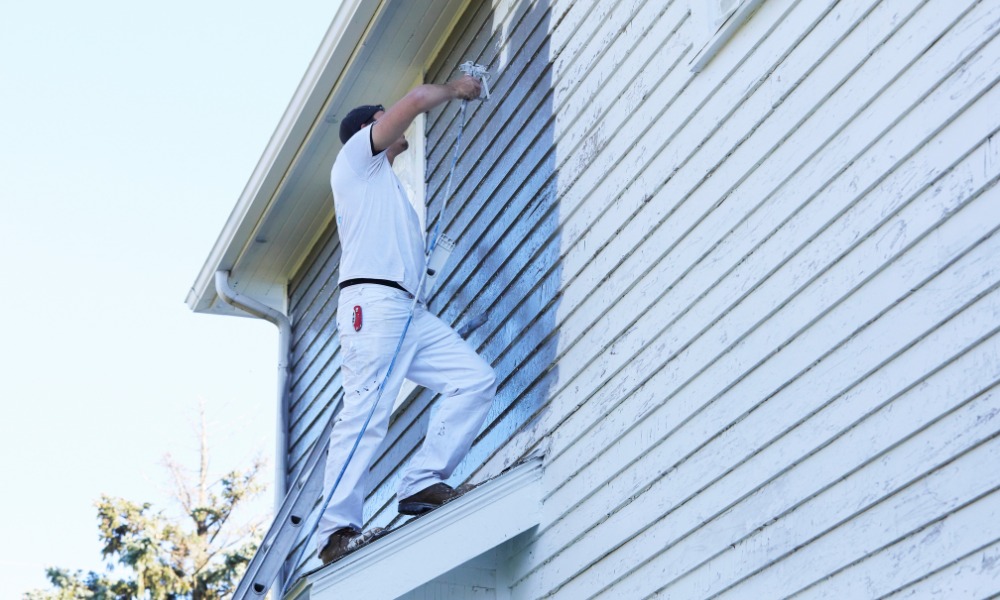
All recommendations below are drawn exclusively from the Sherwin-Williams and Benjamin Moore product lines. Both manufacturers publish detailed application specifications covering temperature windows, humidity thresholds, and surface compatibility.
Sherwin-Williams
|
Product |
Key Benefit |
Best For |
|
Emerald Exterior |
Self-priming, superior moisture resistance, high-elasticity film |
Wood clapboard, fiber cement, coastal-facing facades |
|
Duration Exterior |
Advanced weather-blocking, strong mildew resistance |
High-humidity zones, shaded north-facing walls |
|
SuperPaint Exterior |
Reliable all-around performance, practical mid-tier option |
Vinyl siding, low-exposure secondary surfaces |
Benjamin Moore
|
Product |
Key Benefit |
Best For |
|
Aura Exterior |
Color Lock technology, all-weather adhesion |
Full exterior repaints, UV-heavy coastal facades |
|
Regal Select Exterior |
Humidity resistance, low-temperature application (down to 40°F) |
Fall painting windows, shaded and moisture-prone surfaces |
How Do You Prepare a Greenwich Home’s Exterior for Paint That Actually Lasts?
Surface preparation is the single most important variable in exterior paint longevity. Substrate prep quality is the primary determinant of real-world paint performance, outweighing product quality in most conditions. The best paint on the market will fail within two seasons when applied to a compromised or improperly cleaned surface.
Step-by-step prep process for Greenwich exterior painting projects:
- Inspect the substrate. Identify rotted wood, cracked caulk, failed glazing around windows, and delaminating siding. Repair or replace before any cleaning begins.
- Power wash the entire exterior. Remove salt residue, mildew, chalk, and loose paint. On coastal homes, salt accumulation is often invisible but actively compromises adhesion.
- Allow full dry time. Greenwich’s coastal humidity extends drying windows beyond manufacturer minimums. Allow 24 to 48 hours after washing before any scraping, sanding, or priming.
- Scrape and sand all peeling areas. Feather edges smooth to a stable surface. Any remaining loose paint can cause the new coat to peel with it later.
- Prime all bare wood and repaired sections. Use a shellac-based or alkyd primer on bare wood for maximum adhesion. Acrylic primers are appropriate on previously painted, stable surfaces.
- Verify application conditions. Both Sherwin-Williams and Benjamin Moore specify exterior application above 35°F. Greenwich coastal mornings frequently push past that humidity threshold, requiring a mid-morning application start.
- Apply two full coats. Back-roll after spray application on textured or porous surfaces to ensure full penetration. Never thin coats to extend coverage.
Homes built before 1978 may contain lead-based paint. Federal law under the EPA’s Renovation, Repair, and Painting Rule for lead-safe work practices requires any contractor disturbing painted surfaces in pre-1978 homes to hold active EPA Lead-Safe certification. Verify this credential before hiring any painter for a Greenwich home of that age.
Frequently Asked Questions (FAQs)
What is the best exterior paint brand for Connecticut homes?
Sherwin-Williams and Benjamin Moore are the two most consistently recommended brands for Connecticut’s climate. For coastal towns including Greenwich, Westport, Darien, and New Canaan, Sherwin-Williams Emerald Exterior and Benjamin Moore Aura Exterior are strong premium options because they offer durability, moisture resistance, and color retention for demanding exterior conditions.
How often should I repaint the exterior of my Greenwich home?
Most Greenwich homes need repainting every 4 to 6 years, assuming proper prep and premium products were used at the last paint job. Salt air and coastal humidity can shorten those cycles by two to three years on south- and west-facing facades with direct Long Island Sound exposure.
Can I paint my house exterior in the winter in Connecticut?
Exterior painting in winter is possible but requires careful condition monitoring. Minimum application temperatures vary by product line, so homeowners should confirm the exact manufacturer specifications before scheduling winter exterior painting. Late September through early November is the most reliable window for fall exterior painting across Fairfield County.
Does salt air from Long Island Sound actually damage exterior paint?
Yes. Salt particles from Long Island Sound deposit on painted surfaces and accelerate the breakdown of adhesion between the paint film and the substrate, particularly on wood siding. Annual power washing to remove salt buildup significantly extends paint lifespan on Greenwich homes with direct coastal exposure.
What should I ask a painting contractor before hiring them for my Greenwich home?
Before signing any contract, ask these five questions directly:
- Are you CT HIC licensed, and can you provide your license number for verification?
- Do you carry general liability insurance and workers’ compensation coverage?
- Are you EPA Lead-Safe certified for work on pre-1978 homes?
- Which specific paint brands and product lines do you use on every project?
- Walk me through your surface prep process before the first coat is applied.
Ready to Get an Exterior Paint Job Built for Greenwich Weather?
Custom Colonial Painting has completed thousands of residential exterior projects across Connecticut over more than 20 years, including homes throughout coastal Fairfield County facing the exact conditions described in this guide.
Request a free, no-obligation exterior painting estimate for your Greenwich home today.