
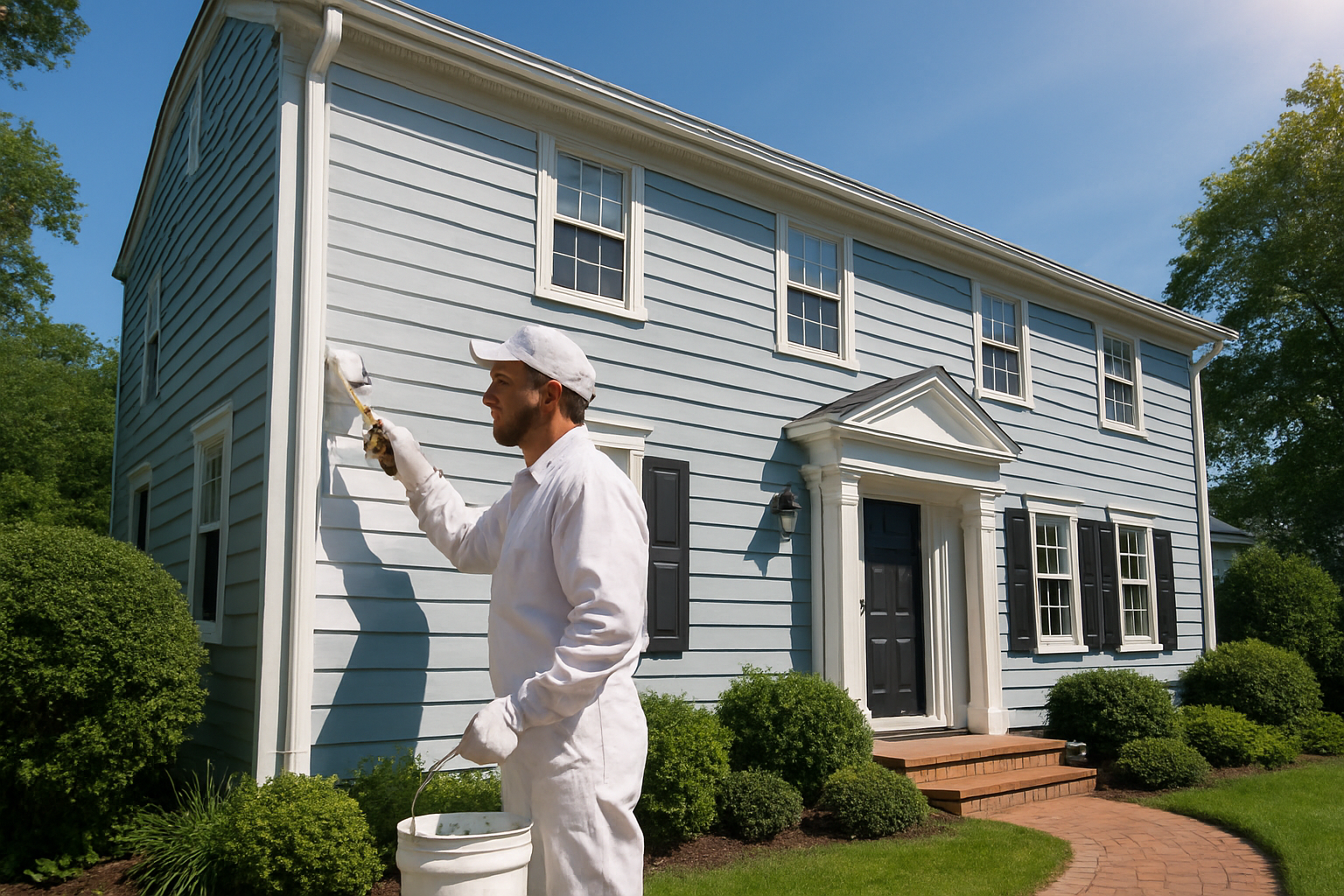
When planning a painting project, understanding how much does house painting cost is essential for budgeting. House painting costs vary widely depending on project scope, surface area, and location. Based on 2025 data, most homeowners spend between $350 and $5,800 for interior work, and $1,500 to $6,500 or more for exterior projects.
Table of Contents
- What Homeowners Are Paying Nationally
- Interior vs. Exterior: How Much Does House Painting Cost for Each
- What Drives the Cost Up or Down
- Connecticut Homeowners: How Much Does House Painting Cost Locally
- Things to Know
- Get an Accurate Estimate for Your Home
- Frequently Asked Questions
Key Takeaways
- Interior painting averages $2.75 per square foot for walls, or $4.70 per square foot when ceilings and trim are included, according to Angi (2026).
- Exterior painting runs $3 to $4 per square foot nationally, based on Improovy data (2024).
- Painting a full 2,500 sq ft home, inside and out with prep, costs around $9,899 nationally (TheFatBook Cost Index V3, 2026).
- Paint quality, surface condition, and contractor experience are the three biggest variables in your final quote.
- A professional paint job can increase a home’s sale price by 3 to 5% and cut time on market by nearly 30% (DataIntelo, 2026).
- Always verify a contractor’s license, insurance, and certifications before signing anything.
What Homeowners Are Paying Nationally
Understanding how much does house painting cost starts with national averages. According to HomeAdvisor (2025), the national average for interior painting sits at $2,021, with a range from $350 to $5,800 depending on home size and complexity.
Exterior projects run higher. HomeAdvisor (2024) reports homeowners spend $3,045 on average for exterior painting. For a whole-house project, including interior, exterior, and all prep work, TheFatBook Cost Index V3 (2026) puts the national figure at $9,899 for a 2,500 square foot home.
Moreover, the US house painting market was valued at $24.4 billion in 2024, projected to grow 5.3% in value in 2025, according to VanDerKolk Painting (2025). That growth reflects sustained demand across both new construction and renovation. In fact, 29% of homeowners hired professionals for painting in 2025, with 70% saying they were likely to hire again within a year (VanDerKolk Painting, 2025).
Interior vs. Exterior: How Much Does House Painting Cost for Each
Cost structures differ meaningfully between interior and exterior projects.
Interior Painting
Angi (2026) reports the average interior painting cost at $2.75 per square foot for walls alone, rising to $4.70 per square foot when ceilings and trim are added. That means a 1,500 sq ft home with walls only runs roughly $4,125, while a fully painted interior with ceilings and trim could reach $7,050 or more.
The number of rooms, ceiling height, and whether trim and doors are included all affect your quote significantly.
Exterior Painting
For exterior surfaces, expect to pay between $3 and $4 per square foot, based on Improovy data (2024). A 2,000 sq ft exterior surface area lands you between $6,000 and $8,000 before any additional repairs.
Here is a quick comparison to help you frame your project budget:
| Project Type | Avg. Cost (National) | Cost Per Sq Ft | Range |
|---|---|---|---|
| Interior (walls only) | $2,021 | $2.75/sq ft | $350 to $5,800 |
| Interior (walls, trim, ceilings) | Varies | $4.70/sq ft | $700 to $9,000+ |
| Exterior | $3,045 | $3 to $4/sq ft | $1,500 to $6,500+ |
| Full House (2,500 sq ft) | $9,899 | Combined | $7,000 to $14,000+ |
Sources: Angi (2026), HomeAdvisor (2025), Improovy (2024), TheFatBook Cost Index V3 (2026)
What Drives the Cost Up or Down
Knowing how much does house painting cost in the abstract is only the start. Your actual quote will be shaped by several specific variables.
Surface condition. Peeling paint, wood rot, water damage, or lead paint all require additional prep work and labor. EPA lead-safe certification is required when disturbing paint in homes built before 1978. These compliance steps affect scheduling and cost.
Paint quality. Budget-grade paints and premium paints from brands like Sherwin-Williams or Benjamin Moore differ significantly in coverage, durability, and finish quality. Premium paints typically require fewer coats and hold up better over time, especially in climates with harsh winters or humidity.
Contractor credentials. Licensed and insured contractors charge more than unlicensed operators for good reason. State licensing, general liability coverage, and workers’ compensation protection all represent real costs that protect you. Moreover, these safeguards matter if something goes wrong on the job.
Project complexity. Two-story homes, wrap-around porches, multi-tone color schemes, and detailed trim work all increase labor hours. Additionally, these factors contribute significantly to your final bill.
Local labor rates. Coastal and northeastern markets, including Connecticut, command higher rates than the national average due to cost of living and regulatory requirements.
If you are in Fairfield County or anywhere in southwestern Connecticut, you will find that local conditions shape your quote significantly. For a deeper look at regional pricing, the cost of painting in new canaan ct resource breaks down area-specific figures worth reviewing before you request quotes.
Connecticut Homeowners: How Much Does House Painting Cost Locally
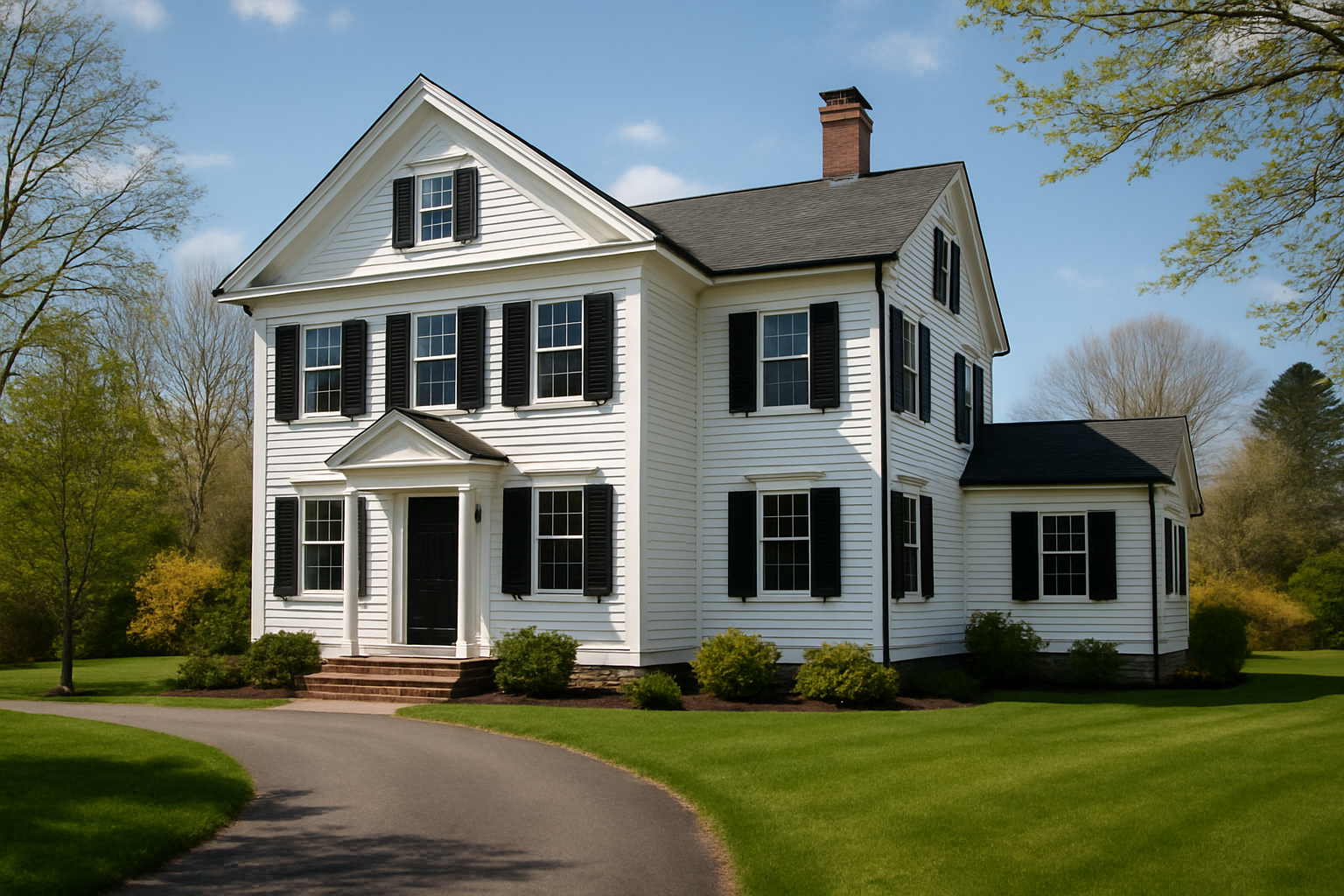
Connecticut homeowners face some unique considerations that push project costs above the national average.
The region’s climate creates real challenges for exterior coatings. Freeze-thaw cycles, high humidity, and salt air near the coast all degrade paint faster than in drier or milder climates. Choosing the right product for the environment is as important as the application itself. Furthermore, if you are evaluating products before selecting a contractor, reviewing the best paint new canaan ct weather recommendations can help you understand which formulations hold up in Connecticut conditions.
Contractor selection is also more critical here than in markets with lower home values. With median home prices in towns like Greenwich and New Canaan among the highest in the country, a poor paint job or contractor dispute carries significant financial exposure. Therefore, resources like how to choose a painter in new canaan ct and how to choose a painter in greenwich ct outline the specific vetting criteria that matter most in this market, including verifying HIC licensing numbers through the Connecticut Department of Consumer Protection.
Studies indicate a professional paint job can increase a property’s sale price by 3 to 5% while reducing time on market by nearly 30% (DataIntelo, 2026). In a market where homes trade at $1 million and above, that math adds up quickly.
Things to Know
- Primer is not always optional. Skipping primer on bare wood, patched drywall, or drastic color changes leads to uneven coverage and premature failure. Always clarify whether primer is included in your quote.
- Lead paint laws apply to pre-1978 homes. Contractors must be EPA Lead-Safe certified to legally disturb old paint in those homes. Verify certification before work begins.
- Per-square-foot quotes can be misleading. Contractors sometimes measure paintable surface area differently. Always confirm whether a quote covers linear feet of trim, ceiling square footage, and number of coats.
- Financing can make a large project more manageable. Some contractors, including Custom Colonial Painting, offer financing options so you do not have to delay a necessary project.
- Timing affects availability and sometimes price. Exterior painting has a more limited seasonal window in the Northeast. Booking in late winter for spring scheduling often produces better contractor availability.
Get an Accurate Estimate for Your Home
Paint pricing looks simple on paper but shifts considerably based on your specific home, its condition, and who you hire. Custom Colonial Painting serves homeowners across Connecticut, including Greenwich, New Canaan, Fairfield, Darien, and dozens of surrounding towns, with licensed, insured crews averaging 15 or more years of experience.
Moreover, exclusive use of Sherwin-Williams and Benjamin Moore products, EPA Lead-Safe certification, and $2M in general liability coverage are standard on every job. Contact Custom Colonial Painting today for a free, personalized estimate tailored to your home’s size, condition, and goals.
Fill out the contact form or call directly so a project specialist can walk you through what your specific project will realistically cost.
Frequently Asked Questions
Q: How much does house painting cost for a 2,000 sq ft home?
A typical 2,000 sq ft home costs between $4,000 and $8,000 to paint, depending on whether the project is interior, exterior, or both. Interior-only projects at $2.75 to $4.70 per square foot fall in the lower range. Exterior projects at $3 to $4 per square foot, combined with any needed prep work, push toward the higher end. Whole-house projects will exceed both figures.
Q: Is it cheaper to paint a house yourself or hire a professional?
DIY painting saves on labor costs upfront but often costs more in the long run if prep work is skipped or inferior products are used. Professional contractors bring the right tools, proper surface prep techniques, and access to commercial-grade materials. For large or complex projects, the quality difference is substantial and affects how long the paint job lasts.
Q: What time of year is best for exterior painting in Connecticut?
Late spring through early fall, roughly May through October, offers the most reliable conditions for exterior painting in Connecticut. Paint requires temperatures above 50°F to cure properly, and low humidity helps it bond correctly. CT winters and early springs can be too cold and wet for reliable exterior application.
Q: Does paint color affect the price?
Paint color itself rarely changes the contractor’s labor rate, but drastic color changes can require additional coats and more primer, which adds cost. Going from dark to light or light to dark often requires an extra coat. Custom or specialty colors in certain premium lines may also carry a higher material cost per gallon.
Q: What should I ask before hiring a painter?
Ask for proof of license, insurance certificates, a detailed written quote, and references from recent local projects before signing any contract. In Connecticut, contractors performing home improvements must hold a valid HIC license. Verify the number through the Connecticut Department of Consumer Protection. Also confirm whether the quote includes prep work, primer, and a specific number of coats.