
Table of Contents
Key Takeaways✔ Popcorn ceilings are widely considered outdated in modern homes ✔ Not all textured ceilings are outdated; modern applications still work ✔ Smooth ceilings remain the most versatile and resale-friendly option ✔ Ceiling updates can improve lighting, space perception, and value ✔ Professional evaluation is critical for safety and long-term results |
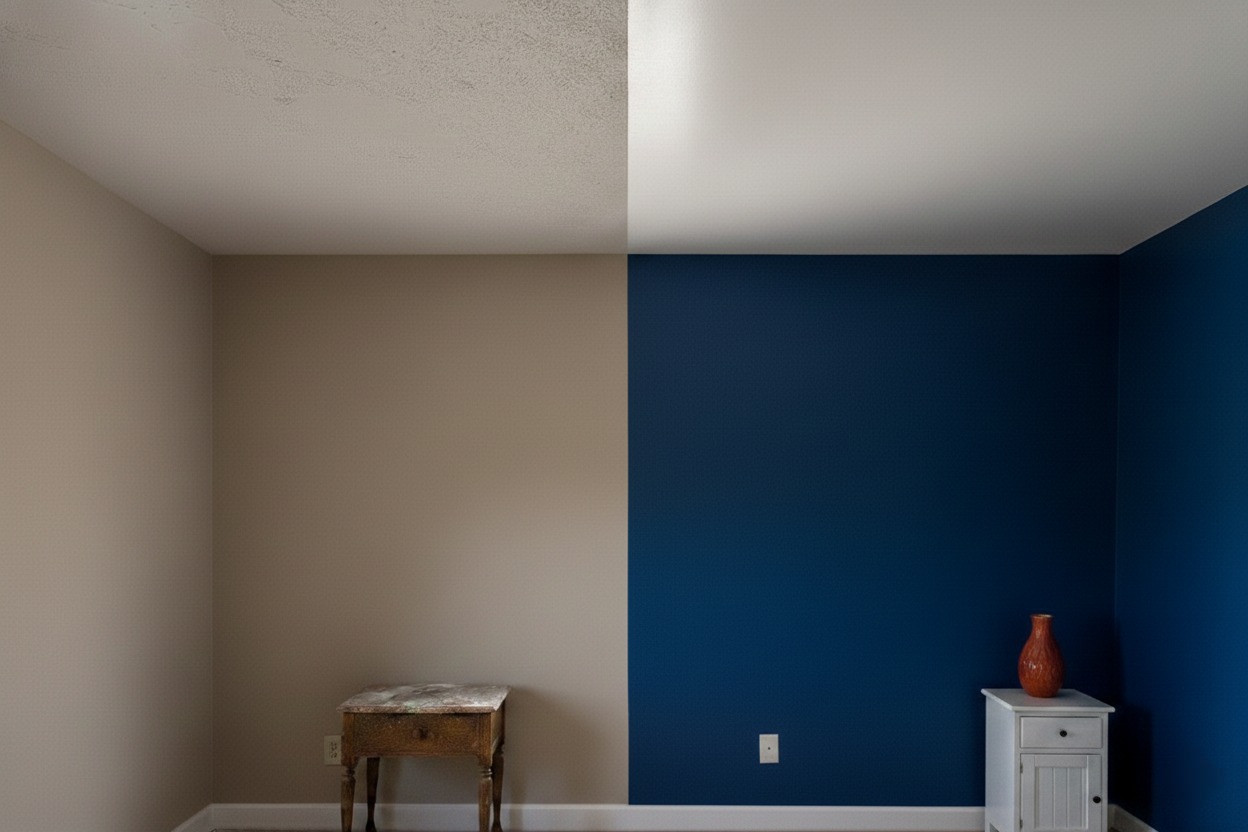
That bumpy ceiling you’ve been ignoring could be dating your entire home and costing you value.
If you live in Connecticut, chances are your home has, or once had, a popcorn ceiling or some form of textured finish. These ceilings were everywhere for decades, but design standards have changed.
Homeowners today care about resale value, clean lines, and modern finishes that reflect current taste. So are textured and popcorn ceilings truly outdated, or do they still have a place in today’s homes?
The short answer: it depends on the texture, the space, and how it’s handled.
What Is a Popcorn Ceiling and Why Was It So Popular?
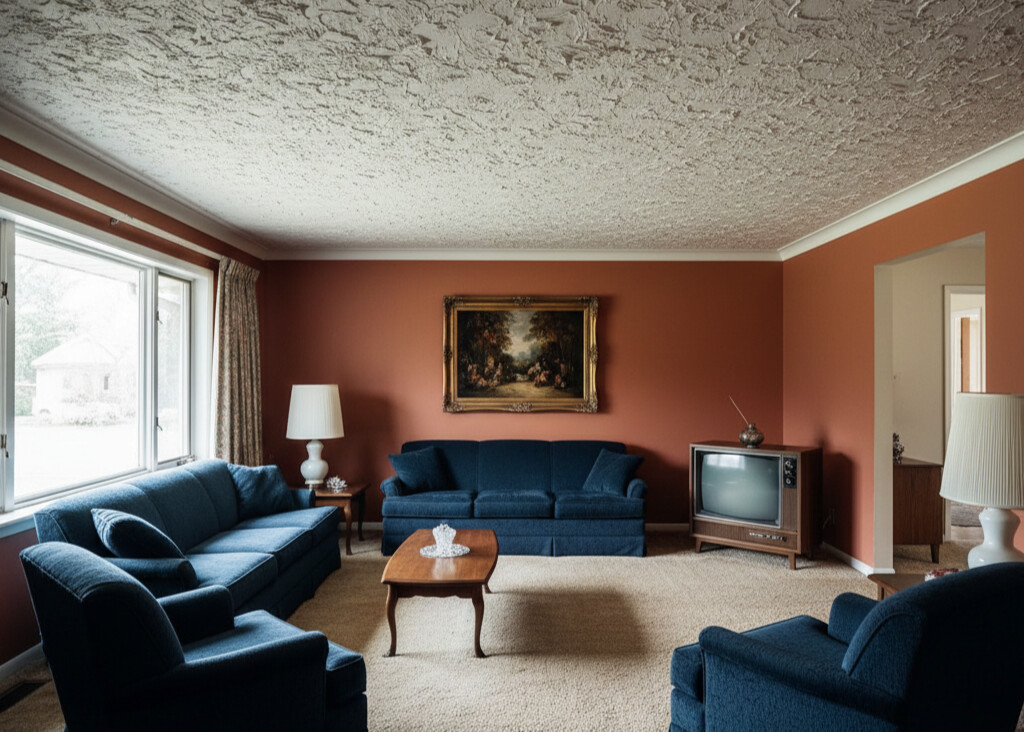
A popcorn ceiling is a spray-on ceiling finish made with a thick popcorn texture that creates a rough, bumpy surface. It became widely popular from the 1950s through the 1980s, especially in suburban homes across Connecticut.
Builders favored popcorn ceilings because they were inexpensive, fast to apply, and excellent at hiding imperfections. They also helped dampen sound, which made them appealing in multi-room homes and developments.
The Pros That Made Popcorn Texture a Go-To Choice
For many years, popcorn ceilings were viewed as a smart, practical solution—especially for large-scale residential construction.
Key advantages included:
✔ Lower labor costs due to fast application
✔ Minimal surface prep, saving time during construction
✔ Effective at hiding drywall imperfections, seams, and cracks
✔ Sound-dampening qualities that reduced echo in open rooms
The Cons That Are Turning Homeowners Away
What once felt efficient now often feels outdated to today’s homeowners and buyers.
Common drawbacks include:
✔ Dated appearance that clashes with modern design preferences
✔ Hard to clean and maintain, especially after years of dust buildup
✔ Difficult to repair, with patches rarely blending in seamlessly
✔ Reduced light reflection, making rooms feel darker and smaller
✔ Potential asbestos concerns in older popcorn textures, increasing safety and renovation risks
Are Textured Ceilings Outdated in Modern Homes?
In most modern interiors, heavily textured ceilings are considered outdated, especially popcorn ceilings. Today’s design trends favor smoother, more intentional finishes that allow lighting, paint colors, and architectural details to stand out. That said, not all textured ceilings are created equal. While popcorn ceilings are largely out of favor, certain updated textures still work when done correctly.
When a Textured Ceiling Still Makes Sense
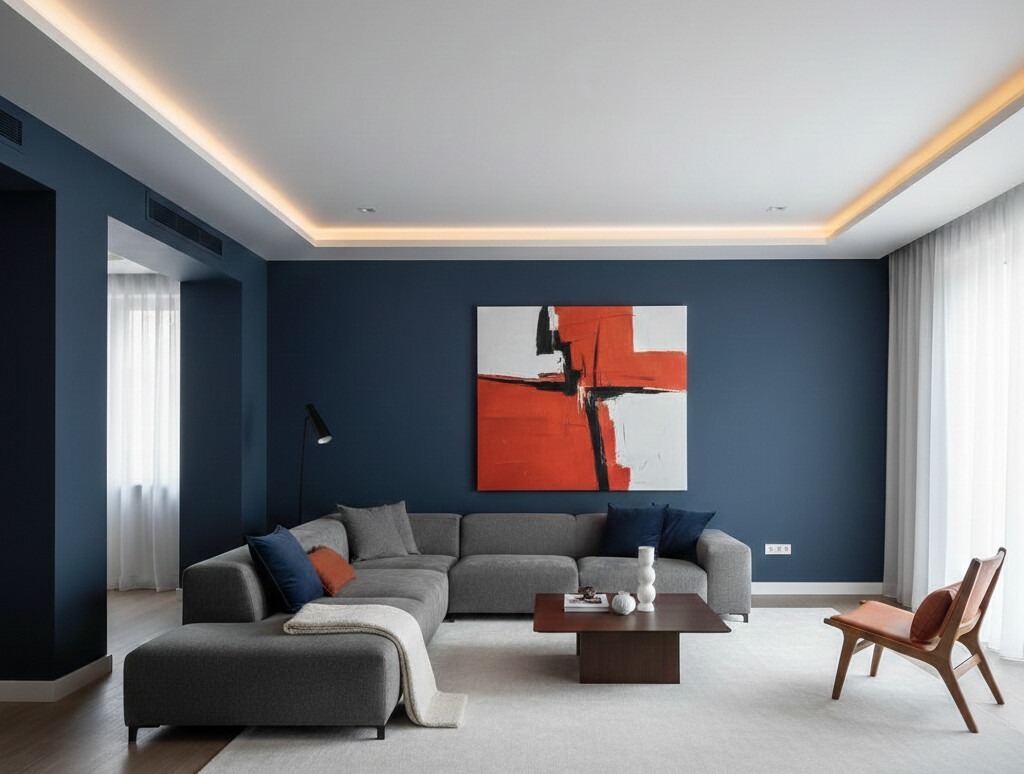
While heavy, outdated textures like popcorn ceilings have largely fallen out of favor, texture itself is not automatically a design mistake. In the right setting, with the right application, a textured ceiling can still serve a purpose and even enhance a space.
Spaces Where Texture Can Still Work
Certain rooms and home styles benefit more from subtle texture than others.
Textured ceilings may still be appropriate in:
- Basements, where sound absorption helps reduce echo and improve comfort
- Older colonial or historic-style homes, where perfectly smooth ceilings may feel out of character
- Rooms with lower ceilings, when a light, refined texture helps mask minor imperfections
- Home offices, media rooms, or playrooms, where acoustics are more important than visual minimalism
In these spaces, the goal is function and cohesion rather than making a design statement.
Intentional Texture vs. Outdated Texture
The deciding factor isn’t whether a ceiling has texture. It’s whether the texture looks purposeful.
Modern, intentional textures:
- Are subtle and evenly applied
- Add depth without drawing attention
- Complement the home’s architecture and lighting
- Feels like a design choice rather than a construction shortcut
Outdated textures, on the other hand:
- Appear heavy or uneven
- Reduce light reflection
- Visually lower the ceiling
- Signal age rather than character
Modern Ceiling Texture Trends Homeowners Prefer Today
Modern design has shifted away from heavy textures and toward subtle finishes that add depth without visual clutter. Modern ceiling texture focuses on refinement rather than concealment.
Knockdown Texture: A Softer Alternative
Knockdown texture offers a flattened, mottled appearance that feels far more current than popcorn. It pairs well with Connecticut’s colonial and transitional homes and adds interest without overwhelming the space.
Skip Trowel and Light Hand-Applied Finishes
These textures create a custom, artisan look that feels deliberate. When applied lightly, they complement modern interiors while preserving warmth and character.
Smooth Ceilings: The Gold Standard of Modern Design
Smooth ceilings dominate new construction and high-end renovations. They reflect light evenly, make rooms feel taller, and provide the cleanest possible backdrop for modern living.
Textured Ceiling vs. Smooth Ceiling: Which Is Right for Your Connecticut Home?
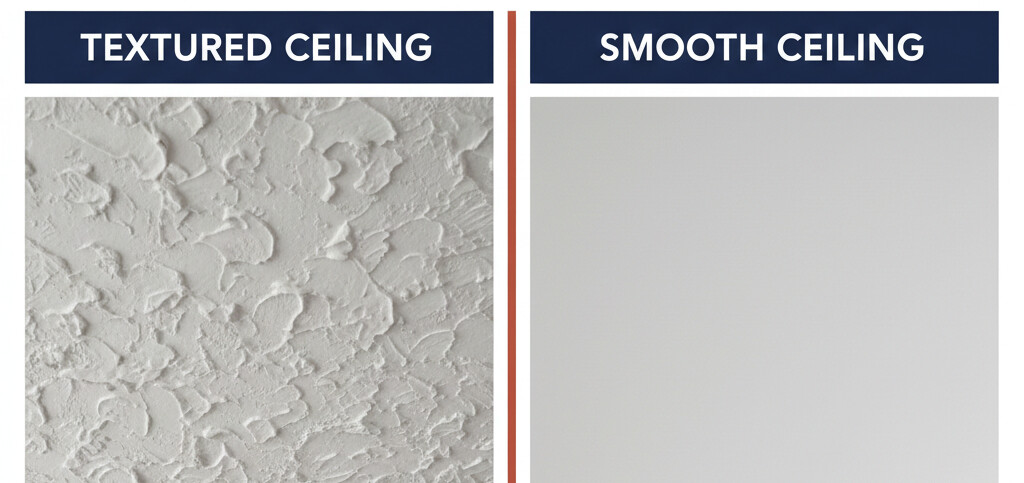
Choosing between a textured ceiling and a smooth ceiling depends on your home’s age, ceiling height, lighting, and long-term goals. Smooth ceilings tend to appeal to a broader range of buyers, especially in competitive Connecticut real estate markets.
How Ceiling Choice Impacts Home Value in CT
Homes with updated ceilings often show better during listings and inspections. A dated textured ceiling can signal deferred maintenance, while a smooth or modernized ceiling suggests a well-cared-for home.
Quick Facts: Textured and Popcorn Ceilings
|
Should You Remove a Popcorn Ceiling or Paint Over It?
When dealing with an outdated popcorn ceiling, homeowners often look for the fastest and least disruptive solution. Painting over the texture may seem appealing, but it comes with limitations that are important to understand before deciding.
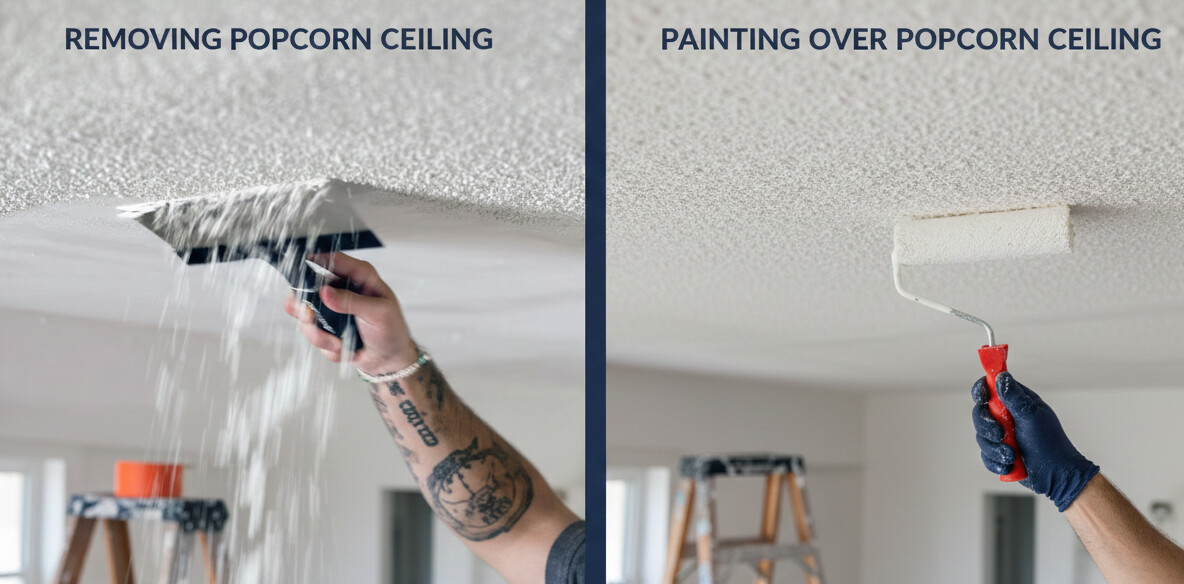
Painting Over a Popcorn Ceiling: Pros and Cons
Painting can offer a short-term visual improvement, but it does not modernize the ceiling itself.
Potential benefits include:
- Brighter appearance in the short term
- Lower upfront cost compared to removal
- Less initial disruption to the space
However, painting over popcorn ceilings also creates challenges:
- The texture remains dated and visually heavy
- Thick paint can cause sagging or peeling
- Dust and debris become sealed into the texture
- Future removal becomes more difficult and expensive
In many cases, painting delays the inevitable rather than solving the problem.
Removing a Popcorn Ceiling: A Long-Term Solution
Complete removal eliminates the texture and allows for a smooth or modern ceiling finish that better suits today’s interiors.
Benefits of removal include:
- Clean, contemporary appearance
- Improved light reflection and room brightness
- Increased perceived ceiling height
- Easier maintenance and future repainting
- Stronger appeal to buyers and inspectors
While removal requires more preparation and expertise, it delivers lasting visual and functional improvements.
Safety Considerations for Older Popcorn Texture
Before any ceiling work begins, the age of your home plays a critical role in determining the safest approach.
Why Asbestos Testing Matters
Homes built before the mid-1980s may contain asbestos in popcorn ceiling materials. This is not something that can be identified by appearance alone.
Professional testing is essential because:
- Disturbing asbestos releases harmful airborne fibers
- Health risks increase during scraping or sanding
- Improper handling can contaminate the home
- Cleanup and remediation can become costly
The Importance of Professional Evaluation
Professional ceiling evaluation ensures the work is done safely and correctly from the start.
A professional approach includes:
- Asbestos testing when required
- Proper containment and surface protection
- Correct removal or refinishing techniques
- Thorough cleanup and disposal
- A finished ceiling that enhances the space
When it comes to popcorn ceilings, especially in older Connecticut homes, professional expertise protects your health, your home, and your investment.
Why Professional Ceiling Updates Matter More Than Ever
Ceiling work is messy, technical, and highly visible when done incorrectly. Proper removal or refinishing requires containment, surface preparation, skim coating, and expert finishing to achieve a smooth, uniform result. Professional painters ensure the ceiling enhances the space rather than becoming the first thing people notice—for the wrong reason.
Frequently Asked Questions About Popcorn Ceilings
Are popcorn ceilings good or bad?
Popcorn ceilings aren’t inherently “bad,” but they are outdated by today’s design standards. They were originally popular because they were affordable, hid imperfections, and reduced noise. The downside is that they collect dust, are hard to maintain, reduce light reflection, and can pose health concerns in older homes. In modern interiors, they’re generally seen as a drawback rather than a benefit.
Is it okay to live in a house with a popcorn ceiling?
Yes, it’s perfectly okay to live in a home with a popcorn ceiling as long as it’s in good condition and hasn’t been disturbed. Problems arise when the texture starts to crumble, peel, or get damaged. In homes built before the mid-1980s, disturbing a popcorn ceiling without proper testing can pose health risks due to potential asbestos content.
How can you tell if a popcorn ceiling has asbestos?
You can’t tell by looking at it. The only reliable way to know if a popcorn ceiling contains asbestos is through professional testing. Many popcorn ceilings installed before 1985 used asbestos-containing materials. A certified test ensures safety before any scraping, sanding, or renovation work begins.
What is the purpose of popcorn ceilings?
Popcorn ceilings were designed to save time and money during construction. They conceal drywall seams, imperfections, and cracks, while also helping to reduce noise and echo in large rooms. For builders, they offered a fast, low-cost solution. For homeowners today, those benefits are usually outweighed by maintenance issues and dated appearance.
Do popcorn ceilings devalue a home?
In many cases, yes. Popcorn ceilings can negatively impact a home’s perceived value, especially in competitive real estate markets like Connecticut. Buyers often associate them with older construction, deferred maintenance, or potential asbestos concerns. Homes with smooth or modernized ceilings typically show better, feel brighter, and appeal to a wider range of buyers.
Schedule a Professional Evaluation in Connecticut
Outdated ceilings don’t have to be something you live with or learn to ignore. If your home still has an old popcorn ceiling or you’re thinking about upgrading to a more modern ceiling texture, the right update can completely change how your space looks and feels. Homeowners across Connecticut are choosing professional ceiling updates for brighter rooms, cleaner finishes, and the confidence that the work is handled properly by Custom Colonial Painting.
Call or visit our website for a free estimate!